

The abnormally high turnout alarmed Volgograd analysts.
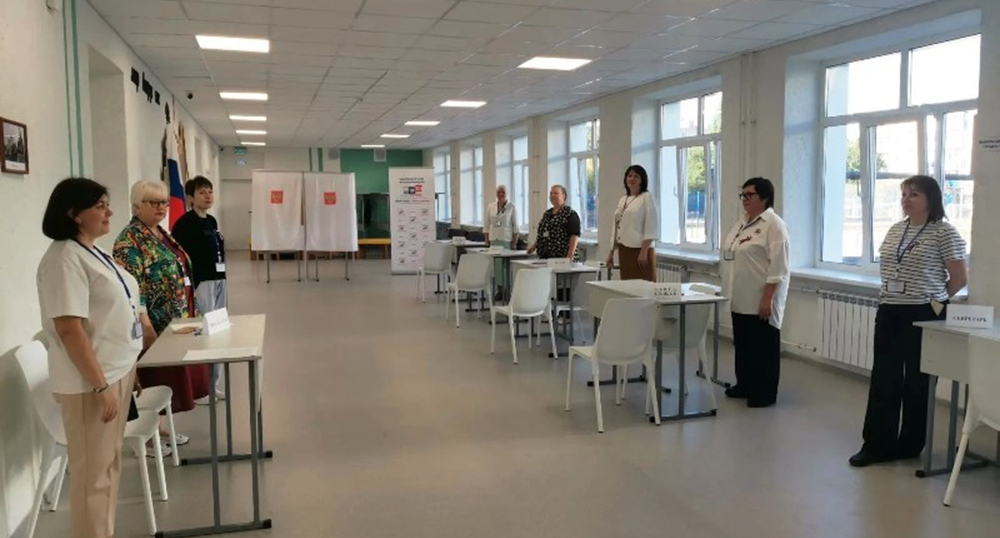
The election commission's data that more than 36 percent of voters in the Volgograd region voted on Friday suggests that such turnout may be related either to artificial inflation of the figure or to coercion to participate in the voting, local analysts indicated, stating that they see signs of the use of administrative resources in it.
As reported by "Caucasian Knot", on September 18, the first day of voting, queues of budget employees "arose" at some polling stations in Volgograd. The police warned civil activists on the same day about the inadmissibility of actions during the elections.
This material is not a public opinion poll and does not claim to be representative. Its purpose is not to determine the political preferences of voters or their intentions to vote for specific candidates and not to predict election results.
Journalist Andrey Rebrov noted that the first day of voting in the Volgograd region raised questions for him primarily due to the unusually high voter activity in the region on a working Friday. By the time the polling stations closed on September 18, the turnout was 36.97 percent. Rebrov compared this figure with the first day of the State Duma elections in 2021, when, according to his data, the turnout was 27.03 percent.
The turnout data for September 18 was published the same day by the Volganet.net portal, citing the Volgograd region's Election Commission.
A nearly ten percent increase in the figure over five years may be related to either artificial inflation of turnout or coercion of budget employees to participate in voting, Rebrov believes.
According to the journalist, acquaintances among budget employees reported that on the morning of September 18, they were allowed to come to work later, "to vote as early as possible on the first day." Even before the elections, Rebrov received information that students of VolGU were asked to vote specifically on Friday and to report their polling station numbers. However, he is unaware of any requirements to vote for specific lists or candidates.
"More accurately, violations in these elections can be discussed after the voting ends and the results are summed up," Rebrov told a correspondent of "Caucasian Knot."
Journalist Vyacheslav Lemkus also noted the unusually high voter activity before noon on September 18 in Volgograd and its suburbs. He saw signs of the use of administrative resources and pressure on budget employees in this.
"Some protest activity in the regional center is not observed. We can talk about protest when we look at voter activity at noon on September 20. Right now, it is absent," Lemkus told a correspondent of "Caucasian Knot."
On September 18 and 19, Lemkus visited several polling stations in the Krasnooktyabrsky and Central districts of Volgograd, as well as in Krasnoslobodsk. There were no queues at the polling stations, and the work of the precinct election commissions proceeded calmly, without incidents.
In the school yards where the polling stations were located, voters in Volgograd mainly discussed the fuel crisis, Lemkus reported. According to his observations, gasoline was mostly available for sale in the Central district, and queues at gas stations were small. At one gas station in Krasnoslobodsk, the queue numbered about 50 cars. The journalist's interlocutors doubted that the improvement would last after the elections. At the polling stations in Krasnoslobodsk, residents also discussed the traffic jam on the bridge over the Volga after a truck overturned and the rise in prices for medicines and food.
According to data on the "Observing Together" project website, as of 21:40 Moscow time, two reports of violations in the elections in the Volgograd region had been received. One of them mentions that university students were asked to vote on the first day of the elections, and the second states that security forces handed warnings to activists and a journalist about the inadmissibility of holding actions. The "Observing Together" project is positioned as an "independent platform for monitoring the 2026 elections." "We publish data on election commissions and violations," the annotation states. Information is transmitted to the project authors by users via Telegram using a bot. "Caucasian Knot" considers it needing confirmation and does not regard information from users as reports of violations.
Volgograd historian Andrey Kudинов stated that he plans to vote on September 20 at 12:00 Moscow time and hopes to meet acquaintances at the polling station. He has no special expectations from the elections, calling the candidates faceless and their slogans unacceptable for himself. In Kudинов's opinion, the current elections are similar to the previous ones, and there is no choice. He also linked his attitude to the return of images and toponyms associated with Stalin in Volgograd.
"I will go to vote only as a sign of protest, passive, but protest," Kudинов told a correspondent of "Caucasian Knot."
Thirty-year-old resident of Volzhsky Nikolai Zuev reported that he voted on September 18. The next day, on his way to the dacha, he did not notice queues at the polling stations. Zuev's relatives, who voted on September 19, also told him about a calm atmosphere without incidents. Zuev noted that a group of conscripts was brought to one of the polling stations. But he pointed out that he saw nothing unusual in this, as a military unit is nearby and this happened in previous elections.
"Everything is calm. There is no excitement or social tension in the city," Zuev told a correspondent of "Caucasian Knot."
The situation with fuel sales in the region has noticeably improved, Zuev noted. According to him, at some gas stations, gasoline was still unavailable, including on Lenin Avenue in Volzhsky, but in the morning fuel was available at most gas stations, and queues remained small. He also noted an improvement in the assortment and prices in grocery stores.
Resident of Ilovlya Zhanna Kurilkova, on the contrary, did not notice an improvement in the fuel situation during the elections. According to her, in the morning, gasoline at the gas station on Budennogo Street quickly ran out, and fuel could be purchased at the gas station on the federal highway "Caspian."
On September 19, Kurilkova and her husband visited one of the polling stations and met acquaintances there. They described the atmosphere at the polling station as friendly, did not notice any violations, but complained about the lack of choice among candidates.
"Empty, they say, elections, just like last time, in 2021," Kurilkova told a correspondent of "Caucasian Knot."
Translated automatically via OpenAI from https://www.kavkaz-uzel.eu/articles/426771



![Tumso Abdurakhmanov. Screenshot from video posted by Abu-Saddam Shishani [LIVE] http://www.youtube.com/watch?v=mIR3s7AB0Uw](/system/uploads/article_image/image/0001/18460/main_image_Tumso.jpg "Tumso Abdurakhmanov. Screenshot from video posted by Abu-Saddam Shishani [LIVE] http://www.youtube.com/watch?v=mIR3s7AB0Uw")