

Analysts assessed the correctness of the statements made by the Dagestani professor regarding blood revenge.
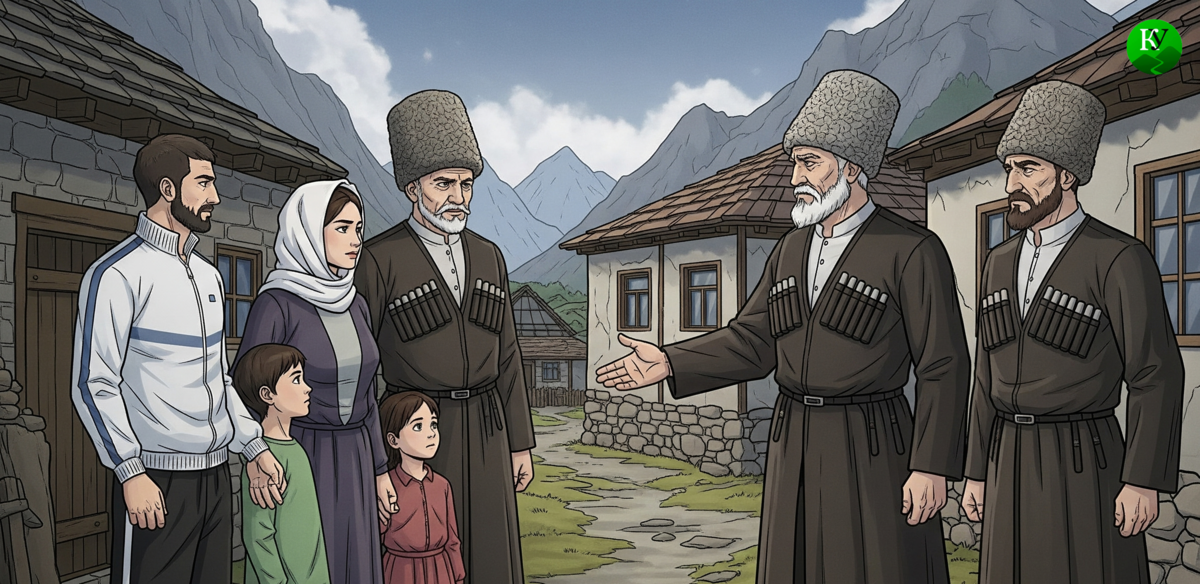
Professor of Dagestan State University Dureya Ziyadova does not deny the crime of murder, but points out that the clause on blood revenge applies only to the peoples of the North Caucasus. Cases of blood revenge in modern conditions are rare, and the parties strive for reconciliation, analysts emphasized.
As reported by "Caucasian Knot", the professor of Dagestan State University Dureya Ziyadova proposed to exclude the motive of blood revenge from the qualifying features of murder and to impose punishment for such crimes under part 1 of Article 105 of the Criminal Code of the Russian Federation instead of part 2, which provides for stricter punishment, up to life imprisonment. According to Ziyadova, the current norm violates the principle of equality of citizens before the law, and in conditions of corruption and dishonest work of law enforcement, blood revenge can serve as a means of restoring justice. Murders motivated by blood revenge should be classified as committed out of personal animosity, since a separate norm of the Criminal Code creates inequality before the law, and if blood revenge is excluded from the qualifying features, it will contribute to the spread of lynching, lawyers interviewed by "Caucasian Knot" pointed out.
The tradition of blood revenge, which developed under the clan system to protect the honor and property of the clan, still acts as a relevant social mechanism in the North Caucasus. According to this custom, the relatives of the murdered must take revenge on the murderer or his relatives, as noted in the report of "Caucasian Knot" "Blood Revenge - How They Kill in the Caucasus Now". Several stories about blood revenge, told by participants and eyewitnesses of events, are presented in the article "The Price for Blood", published on "Caucasian Knot".
The interpretation of Ziyadova's words raised questions
The professor of Dagestan State University Dureya Ziyadova told the correspondent of "Caucasian Knot" that she has faced difficulties due to publications of her statements on blood revenge.
"I now have to report to the rector of the university, to the ministry. These publications have created problems for me. I will refrain from comments because they will also be misinterpreted," Ziyadova said.
She does not call for the abolition of judicial authority. Ziyadova simply pointed out that for those seeking blood revenge, courts are unnecessary, investigations are unnecessary, because they basically know who killed their relative.
One of the Dagestani journalists, who had contacts with Ziyadova, also stated that she was misunderstood.
"Ziyadova's position was not that she called for almost legalizing blood revenge. She does not call for the abolition of judicial authority. Ziyadova simply pointed out that for those seeking blood revenge, courts are unnecessary, investigations are unnecessary, because they basically know who killed their relative. And based on this, they carry out their revenge. She talks about the fact that this blood revenge has its components, has its ritual, and includes elements that allow for peace between those seeking blood revenge," he told the correspondent of "Caucasian Knot" on condition of anonymity.
According to the journalist, the practice that exists in Ingushetia, Chechnya, and Dagestan is effective.
"The practice is generally working, as there is a reconciliation ritual through maslihat, which allows removing claims, say, from the injured party against those who intentionally or unintentionally killed their relative, for example, as a result of a traffic accident. This is actually a working tool and it influences various relationships. But this is provided that the rules of reconciliation are followed," the journalist explained.
Sharia leaves the injured party the right to choose. Either diyat - compensation for murder and forgiveness of the relative, or compensation in blood - punishment of the guilty.
Being a Doctor of Law, Ziyadova does not deny the crime of any murder, he pointed out.
"But she noted that this criminal law, specifically in the context of blood revenge, applies only to the peoples of the North Caucasus, because blood revenge existed there until recently. Somewhere in central Russia, say, if a non-Caucasian committed a revenge murder, this aspect is not taken into account in motivation at all," the journalist also noted.
The motive of blood revenge in Russian criminal law is considered an aggravating circumstance: part 1 of Article 105 of the Criminal Code provides for imprisonment from six to 15 years, and murder motivated by blood revenge is highlighted in clause "e.1" of part 2 of this article, which provides for imprisonment from eight to 20 years. The sanction of the second part also allows for life imprisonment.
In his opinion, in any case, punishment is the responsibility of the state.
"There is a clear answer in the Criminal Code of the Russian Federation - this is murder motivated by blood revenge. Here, in this interpretation, it does not matter whether the murdered person was involved in the murder of the criminal's relative or not. Only the state has the right to kill. If we take the position of blood revenge rituals and religious interpretations, then everything can be different, situationally and individually. Blood revenge can be declared against the entire clan if the clan (family) is not guilty and is hiding the murderer, or it can be declared personally against the murderer. Moreover, much depends on the reconciliation ritual. Sharia leaves the injured party the right to choose. Either diyat - compensation for murder and forgiveness of the relative, or compensation in blood - punishment of the guilty. In the history of the Dagestani peoples, I don't know if this is practiced now, in some societies the injured party could demand the blood of one of the members of the guilty clan, not necessarily the one who killed their relative. Such an interpretation led to the fact that murders in these societies practically did not occur: each clan understood its collective responsibility," the journalist explained.
Journalist Vladimir Sevrinovsky* showed in his documentary film how the mechanism of resolving blood feuds works in Ingushetia and Chechnya. In one case, the families of the murdered and the murderer managed to reconcile, while in another, the relatives of the deceased have refused to forgive the perpetrator for 26 years.
In the absence of a clause on blood revenge, such cases will be considered under the article on murder
The head of the Public Monitoring Commission of Dagestan Shamil Khadulaev believes that the motive of blood revenge is too biasedly used as an aggravating circumstance specifically against Caucasians.
"It seems to me that it should be on general grounds. Murder is murder," he told the correspondent of "Caucasian Knot".
In his opinion, currently, cases of blood revenge in Dagestan are rare.
"This problem is far from being relevant for us. In fact, modern, relatively modern people will not kill the innocent. Earlier, this was a deterrent factor. When you know that if you do it, then they will do it to you, to your relative," Khadulaev explained.
In 2024, the convicted person and his lawyer Sergey Osipov were killed by the victim near the building of the Nogai District Court. The motive for the murder was blood revenge: the victim was dissatisfied with the court's verdict in a traffic accident case in which his son died. The case concerned a traffic accident that occurred near Terekli-Mekteb on May 19. A local resident in a Mazda 6 car hit a 15-year-old teenager on a moped, and the young man died. The court referred to the absence of a forensic examination in the case and deemed it impossible to establish the cause of death of the victim, therefore sentenced the driver to one and a half years of imprisonment. Subsequently, the Supreme Court of Dagestan overturned the verdict of the Nogai District Court. The investigation and the court committed significant violations in the case, the appellate instance stated.
The lawyer Felix Vertegel stated that the motive of blood revenge can apply not only to those from the Caucasus.
"But such a qualifying feature needs to be proven. If such a feature is abolished, then, accordingly, in the future, charges will be brought under part one of Article 105," he reported.
The tendency towards reconciliation among those seeking blood revenge dominates in the Caucasus
A Russian Caucasianist stated that in society in the Caucasus, particularly in Dagestan, there is a clear tendency to resolve problems through reconciliation.
In Islam, although there is a right to revenge, it can be, firstly, by court decision, and secondly, reconciliation is strongly recommended.
"The society itself is inclined to resolve issues through masliyat (maslaat, masliat - note from "Caucasian Knot"), they actively gather, and people reconcile and are reconciled. And let’s not forget that there is an Islamization process, and in Islam, although there is a right to revenge, it can be, firstly, by court decision, and secondly, reconciliation is strongly recommended. Even in the case of murder, it is better to reconcile and replace the death penalty with a fine. And people are more inclined to reconcile at present," he told the correspondent of "Caucasian Knot" on condition of anonymity.
The Caucasianist pointed out that, in principle, the customs of blood revenge contradicted Sharia and could lead to significant bloodshed.
"If blood revenge is applied as it is in customs, then people will cut each other down, as it was before, when entire families and clans perished. Caucasians are not bloodthirsty, and it is obvious that society perceives all this differently now. Therefore, honestly, I did not understand the meaning of Professor Ziyadova's speech. Yes, the motive of blood revenge was indeed included when Soviet power was established and began to fight harshly against blood revenge. But it seems to me that in this sense, the interests of the state and the interests of Muslims coincide," the interlocutor summarized.
We have updated the applications on Android and IOS! We would appreciate criticism and ideas for development both in Google Play/App Store and on the pages of the Caucasian Knot in social networks. Without installing a VPN, you can read us on Telegram (in Dagestan, Chechnya, and Ingushetia - with VPN). Through VPN, you can continue to read "Caucasian Knot" on the website, as usual, and on social networks Facebook**, Instagram**, "VKontakte", "Odnoklassniki" and X. You can watch videos from "Caucasian Knot" on YouTube.
* included in the register of foreign agents by the Ministry of Justice of Russia.
** the activities of the Meta company (which owns Facebook, Instagram, and WhatsApp) are banned in Russia.
Translated automatically via OpenAI from https://www.kavkaz-uzel.eu/articles/428256