


The flood in Dagestan was the "last straw" before Melikov's resignation.
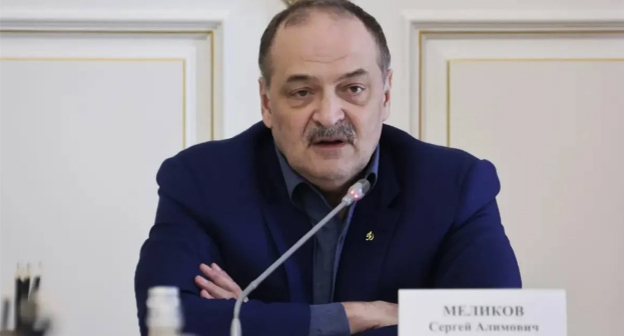
During his tenure as head of Dagestan, Melikov failed to stabilize the situation. The pogrom at Makhachkala airport, protests against mobilization, and terrorist attacks in Makhachkala and Derbent resonated throughout the country. He also failed to earn the trust of the republic's residents. Slowness in eliminating the consequences of the flood was the final factor that led to his decision to resign.
As reported by the "Caucasian Knot," at a meeting with Putin on April 30, the head of the Supreme Court of the Republic, Fyodor Shchukin, was proposed for the post of head of Dagestan, and the plenipotentiary representative to the North Caucasus Federal District, Magomed Ramazanov, was proposed for the post of head of government. Sergei Melikov will serve in his capacity as acting head until the issuance of a decree by the head of state on his resignation; According to Putin, he is finishing his work in the republic and is moving on to another position. Economist and political scientist Sergei Zhavoronkov primarily cited Melikov's inability to stabilize the situation in the republic as the reason for his resignation. "When he came to power, Dagestan, along with Ingushetia, was one of two unstable regions in the Eastern Caucasus. "There are still threats of some kind of unrest in Dagestan, and it's likely that no one in the Kremlin wanted this year's State Duma elections to be marred by mass protests," he told a "Caucasian Knot" correspondent.
Melikov failed to establish relationships with a number of influential people in Dagestan – primarily with billionaire Suleiman Kerimov.
Zhavoronkov also noted that Melikov was let down by a host of corruption scandals involving officials he appointed, while in Chechnya or, for example, Karachay-Cherkessia, there were no such scandals.
"There were also scandals involving Melikov himself and his family: the display of an extremely expensive watch, which he clearly couldn't afford, and a video recording of his son's life, which sparked rumors of his involvement in a morally condemned group of people." Furthermore, Melikov failed to establish relationships with a number of influential people in Dagestan—most notably billionaire Suleiman Kerimov. This didn't come out publicly, as Kerimov is a private figure, but it did happen," he stated.
Zhavoronkov also drew attention to the simultaneous appointment of the new head of the republic and prime minister, which broke with the previous tradition of the appointed head of the republic later selecting a candidate for prime minister. He emphasized that under the new government, persecution of officials appointed by Melikov was possible. "The current form of his dismissal is an indulgence for him alone, but not for his family members or associates," the expert noted.
In the past, Dagestan had a special electoral system - national-territorial districts, quotas for seats in parliament. Avars traditionally received the post of president, Dargins - the speaker of parliament, and the prime minister was a Kumyk, Mukhu Aliyev, then the head of Dagestan, said in an interview with the "Caucasian Knot" in April 2009. In 2006, the federal center brought the republic's electoral system into line with the national one. National balance was also maintained in the republic's government. In February 2013, Russian President Vladimir Putin emphasized that the team assembled by Ramazan Abdulatipov must be balanced across all components, including ethnicity.
A Caucasus expert, speaking on condition of anonymity, emphasized that talk of the Dagestani leader's resignation had been circulating for a long time. "This means that some information had been reaching us for a long time, and the dismissal wasn't just someone's whim," he said.
In his opinion, there were a whole host of reasons for Melikov's dismissal, as he "failed at everything," but the immediate reason for the decision was the region's leadership's extremely inept response to the spring flooding.

"The flood was probably the last straw, when it became clear that neighboring Chechnya had coped much better with the consequences. "The helplessness and inability to do anything was laid bare. Given that much time, we could have, if not solved the problems, then at least learned to respond quickly and manage such situations," he stated.
Melikov's recent report on the republics' participation in the SVO played no role in his dismissal. "Everything is being considered holistically. The SVO is one thing, but failures in such a complex region don't outweigh that," he concluded.
A political scientist, who also spoke on condition of anonymity, identified three reasons for Melikov's resignation. “This is the inability to build relationships with the Dagestani clans (against the background of the inability or unwillingness to dismantle them completely - and if you can’t win, then you are obliged to negotiate), the “ivory tower” phenomenon, that is, the lack of normal communication with residents (an example is the first days after the March flood, when no one went to the victims at all) and, in principle, weakness in socio-economic issues - how many cases were there when Melikov suddenly “learned” about some problems at some meeting,” he noted.
Journalist Vladimir Sevrinovsky* noted that Melikov was one of the “outsider” candidates from among the security forces who were appointed after the abolition of direct elections of the head of Dagestan in 2013. “The first of them, Vladimir Vasiliev, a former deputy minister of the Ministry of Internal Affairs, expressed the idea behind this this way: "It's not just me who has come to you; Russia has come to you." (Vasiliev stated this at an official presentation at the Dagestan Government House on October 5, 2017 - ed. "Caucasian Knot"). It was assumed that an outsider would be more effective in combating corruption, bringing order to housing construction, and solving other pressing problems. But this didn't happen. In 2020, Vasiliev left and was replaced by military man Sergey Melikov – a man with Dagestani roots, but who had never lived in the republic," he emphasized.

Sevrinovsky* added that at first, Melikov was not averse to humane gestures. "For example, he personally received Murtazali Gasanguseinov, whose sons security forces killed and tried to pass off as militants. The killers remained unpunished, but at least the new head did not ignore the victims' father, as two others did." "his predecessor," he said.
However, according to the journalist, Melikov handled the region's main problems hardly any better than the republic's previous leaders. "However, he also lived through a much more difficult time. Dagestani freedom was increasingly restricted – rallies were banned, participants in conferences on social issues were persecuted, opposition members were jailed for allegedly possessing grenades or other weapons. And yet, Dagestan was constantly a source of less than encouraging news for the authorities. In the fall of 2022, protests against mobilization swept the republic. Neighboring republics didn't even attempt mobilization on a similar scale, and in Chechnya, it was cancelled altogether by Ramzan Kadyrov, who stated that the republic had already exceeded all plans for sending troops to the front," the journalist noted.
On September 25 and 26, 2022, large-scale protests against mobilization took place in Makhachkala. The protests ended in mass arrests. Security forces also detained journalists covering the protests. At least 148 people were found guilty of administrative offenses. At least 20 criminal cases were opened against demonstrators for the use of violence against police officers. Materials on the protests against mobilization in the North Caucasus and Southern Federal Districts have been collected by the Caucasian Knot on the thematic page "Mobilization and Protests." The "Caucasian Knot" also published a report titled "Mobilization: How Southern Russia Is Protesting".
The unrest at Makhachkala Airport also undermined trust in the republic's authorities, the journalist noted.

"After the Palestinian-Israeli conflict escalated, a crowd stormed Makhachkala Airport in search of Jews arriving from Israel. This was a clear miscalculation by the authorities – the danger was known in advance, and it could have been prevented by blocking the approaches to the airport and deploying a large detachment of riot police there. However, this was not done. According to official reports, at least 135 people were convicted under criminal offenses, receiving sentences ranging from 6.5 to 15 years in a general regime penal colony. Many Dagestanis considered this punishment excessive or even an exemplary reprisal, which further undermined trust in the authorities," he emphasized.
Subsequent events also did not add to Melikov's popularity.
"On June 23, 2024, a massacre occurred in the republic. A series of coordinated terrorist attacks, during which two synagogues were burned and a priest was shot. Finally, in the spring of 2026, Dagestan suffered a devastating flood, which was caused not only by the elements but also by poor infrastructure – a dam was breached, a railway bridge collapsed, and the sewage system was overwhelmed. This latest disaster likely served as the pretext for replacing the republic's leader, whose tenure had been marked by similar disasters almost every year – and by less-than-effective methods of dealing with them," Sevrinovsky* noted.
Floods caused by torrential rains began in the North Caucasus in late March and became some of the most destructive in recent years. Dagestan and Chechnya suffered the most from the disaster, according to the "Caucasian Knot" report "Spring flooding in the North Caucasus-2026".
The future head of Fyodor Shchukin continues the trend of "outsiders" sent from outside, the journalist noted.
"It's unlikely that anything will change significantly with his arrival. Dagestanis have become accustomed to perceiving the government as something alien, something they have no connection to, and any hope that an envoy from the federal center would bring law and order to the region has vanished completely – since the center itself has been playing with the law increasingly freely lately," concluded Sevrinovsky*.
We've updated the apps for Android and IOS! We would be grateful for criticism and ideas for development both in Google Play/App Store and on KU pages in social networks. Without installing a VPN, you can read us in Telegram (in Dagestan, Chechnya and Ingushetia - with VPN). Through VPN, you can continue reading "Caucasian Knot" on the website, as usual, and on social networks: Facebook**, Instagram**, "VKontakte", "Odnoklassniki" and X. You can watch the "Caucasian Knot" video in YouTube. Send messages on WhatsApp** to +49 157 72317856, on Telegram to the same number, or write to @Caucasian_Knot.
* are included in the register of foreign agents.
** Meta (owner of Facebook, Instagram, and WhatsApp) is banned in Russia.
Translated automatically via OpenAI from https://www.kavkaz-uzel.eu/articles/422885
![Tumso Abdurakhmanov. Screenshot from video posted by Abu-Saddam Shishani [LIVE] http://www.youtube.com/watch?v=mIR3s7AB0Uw](/system/uploads/article_image/image/0001/18460/main_image_Tumso.jpg "Tumso Abdurakhmanov. Screenshot from video posted by Abu-Saddam Shishani [LIVE] http://www.youtube.com/watch?v=mIR3s7AB0Uw")