

The deteriorating condition of a journalist on hunger strike in Baku has alarmed his relatives.
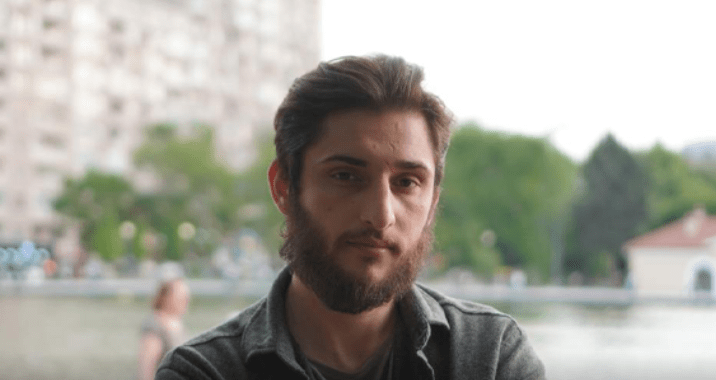
The condition of Nurlan Gahramanli, arrested in the Meydan TV case, has noticeably worsened as a result of a prolonged hunger strike, and he is not receiving effective medical care, the journalist's wife reported.
As reported by the "Caucasian Knot," on January 16, journalist Nurlan Gahramanli, arrested in the Meydan TV case, declared an indefinite hunger strike in protest against violence by guards. On February 20, at a court hearing in Baku, he announced that he had been on a hunger strike for 36 days, but was not receiving medical care.
Nurlan Gahramanli is a freelance journalist who collaborates with various independent publications and is known under the pseudonym Nurlan Libre. He was arrested on February 20, 2025. Nurlan's condition has significantly worsened, according to his wife, who saw him in the pretrial detention center on February 19. "He is severely emaciated. He is losing weight significantly each time, literally wasting away. Nurlan could barely move. He complained of pain all over his body. He only drinks water. He is not receiving any medical care," she told the Caucasian Knot.
Nurlan Gahramanli's health, who is continuing a long hunger strike, has significantly worsened, his wife, Asli Alizade, reported.
"As a result of the hunger strike, he has started having headaches and is rapidly losing weight. Doctors are limiting themselves to blood tests and blood pressure measurements; no other measures are being taken," Meydan TV quoted her as saying on March 3.
I went to meet Nurlan, but the meeting was not allowed.

The woman noted that she was not allowed to meet with her husband. "Today I went to meet with Nurlan, but the meeting was not allowed," she said.
According to her, Nurlan's ability to make phone calls was also restricted, following complaints to the ombudsman. The complaints filed with the ombudsman were also confiscated from the arrested man, Alizade claims. "The complaints and statements he filed with the ombudsman were taken from him and not returned," she explained.
The journalist's wife called the situation paradoxical. "Imagine a country where you complain to the human rights ombudsman about a violation of your rights, but instead of improving, your situation worsens. Where will you turn? Who will you complain to?" she was quoted as saying.
On March 2, it was reported that Nurlan Gahramanli filed a complaint with the Prosecutor General of Azerbaijan about threats from security forces and his placement in a punishment cell after refusing to end his hunger strike. The journalist's hunger strike also resulted in pressure on his cellmate.
The Meydan TV case was opened in December 2024, when six journalists were detained and later arrested on charges of currency smuggling. They linked the criminal case to their professional activities. By August 2025, 11 people had been arrested in the Meydan TV case. . In late August, it was announced that the investigation had been completed, and a 12th suspect, photojournalist Ahmed Mukhtar, had been identified. The arrested journalists were also charged with seven additional criminal offenses. On December 12, 2025, at the first hearing in the Meydan TV case, the court refused to close the criminal case and release the accused.

Those arrested in the Meydan TV case were persecuted at the direction of the Azerbaijani leadership for their journalistic activities, said one of the defendants, Shamshad Agha. "You have neither the authority nor the courage to make arbitrary decisions in any process controlled by [the country's president] Ilham Aliyev. In these processes, the investigator, the prosecutor, and the judge are all Ilham Aliyev," he told the court.
Journalists from other media outlets, including Abzas Media, Toplum TV, and Kanal-13, have also been persecuted in Azerbaijan. On June 20, journalists and employees of Abzas Media were sentenced to imprisonment for terms ranging from 7.5 to 9 years. In court, they denied the charges, emphasizing that they were being persecuted for their professional activities and for investigating corruption cases.
The number of political prisoners in Azerbaijan reached its highest point in 2024 since the country's 23-year membership in the Council of Europe, according to the "Caucasian Knot" report "Key Points About the Record Number of Political Prisoners in Azerbaijan." At the same time, the Azerbaijani authorities deny the existence of political prisoners in the country.
Translated automatically via OpenAI from https://www.kavkaz-uzel.eu/articles/421305

![Tumso Abdurakhmanov. Screenshot from video posted by Abu-Saddam Shishani [LIVE] http://www.youtube.com/watch?v=mIR3s7AB0Uw](/system/uploads/article_image/image/0001/18460/main_image_Tumso.jpg "Tumso Abdurakhmanov. Screenshot from video posted by Abu-Saddam Shishani [LIVE] http://www.youtube.com/watch?v=mIR3s7AB0Uw")