

Karabakh activists accused the Armenian authorities of downplaying issues at COP17
During the UN biodiversity conference in Yerevan, Armenian authorities downplayed the issue of the destruction of Armenian cultural heritage in Karabakh and the problem of environmental threats in Syunik, activists stated on the last day of the event.
As reported by “Caucasian Knot”, on October 18, Karabakh politicians and activists expressed outrage that UN Secretary-General António Guterres, who came to COP17, did not speak out about the rights of Armenians in Nagorno-Karabakh.
The biodiversity conference COP17 opened in Yerevan on October 19 and concluded today, October 30. Events took place at two venues: in the Blue Zone (Expo Center “Meridian”) there were official discussions, negotiations, sessions, and press conferences, while in the Green Zone (Karen Demirchyan Sports and Concert Complex) exhibition and thematic pavilions of participating countries operated. Organizations of Karabakh Armenians did not receive pavilions at the conference.
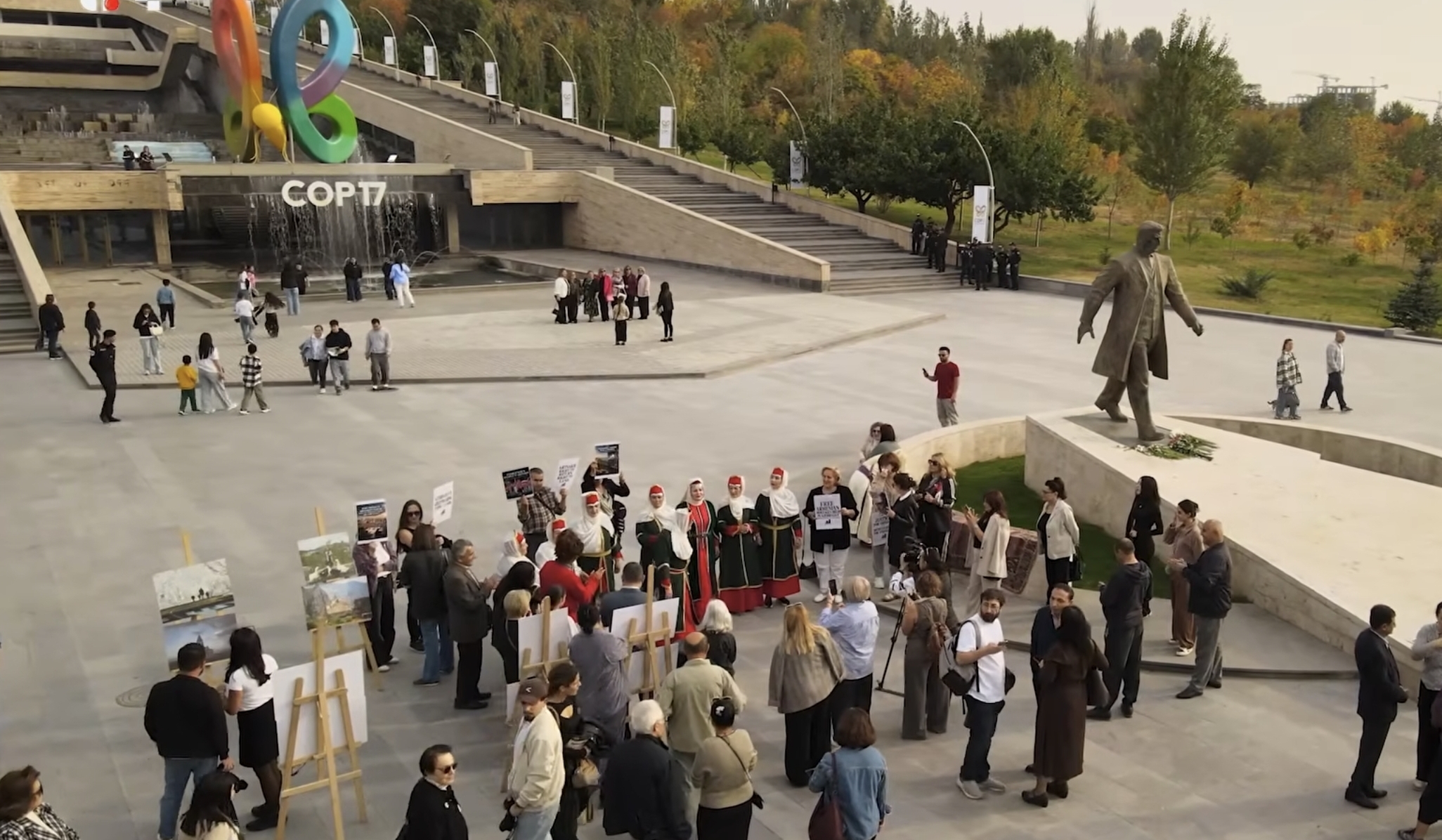
The event “Discover Artsakh (the self-designation of Nagorno-Karabakh). Let’s get acquainted!” took place on October 28 at the monument to Karen Demirchyan near the entrance to the “green zone” of COP17. The program included traditional songs and dances, tasting of national cuisine dishes, including jengyalov hats, and a photo exhibition about Nagorno-Karabakh and its cultural heritage. Anyone interested could attend, reports the correspondent of “Caucasian Knot”.
Member of the Public Council of Nagorno-Karabakh Alvard Zakaryan explained that the organizers had to choose this venue after being denied an exhibition pavilion. According to her, one of the main goals of the event is to remind participants and organizers of the conference about the existence of the Karabakh people and their culture.
“We managed to attract the attention of some COP17 participants to the living culture of Artsakh Armenians, their traditions, and the inseparable connection with their historical homeland,” she said.
Karabakh organizations and activists held actions starting from October 15: four days before the opening of the COP17 conference, an action of the initiative “No protection of nature without human rights” took place in front of the Armenian government building. Participants demanded to stop the Amulsar mine and spoke about the right of Karabakh people to return. Five days later, activists sent letters to the diplomatic missions of several countries and the EU representation. The letters called for raising the issue of protecting the rights of Karabakh people at the conference.
Public figure Meri Davtyan, former head of the scientific and cultural center of the Matenadaran “Gandzasar” in Nagorno-Karabakh, noted that activists held actions, sent appeals to embassies, and participated in panel discussions. “Even after COP17, representatives of Artsakh will continue to fight for their rights,” she emphasized.
Zakaryan lamented the “formal responses” to appeals. She believes that the Armenian society and diaspora need to more actively use international platforms and mechanisms “to achieve results.”
Claims against the authorities
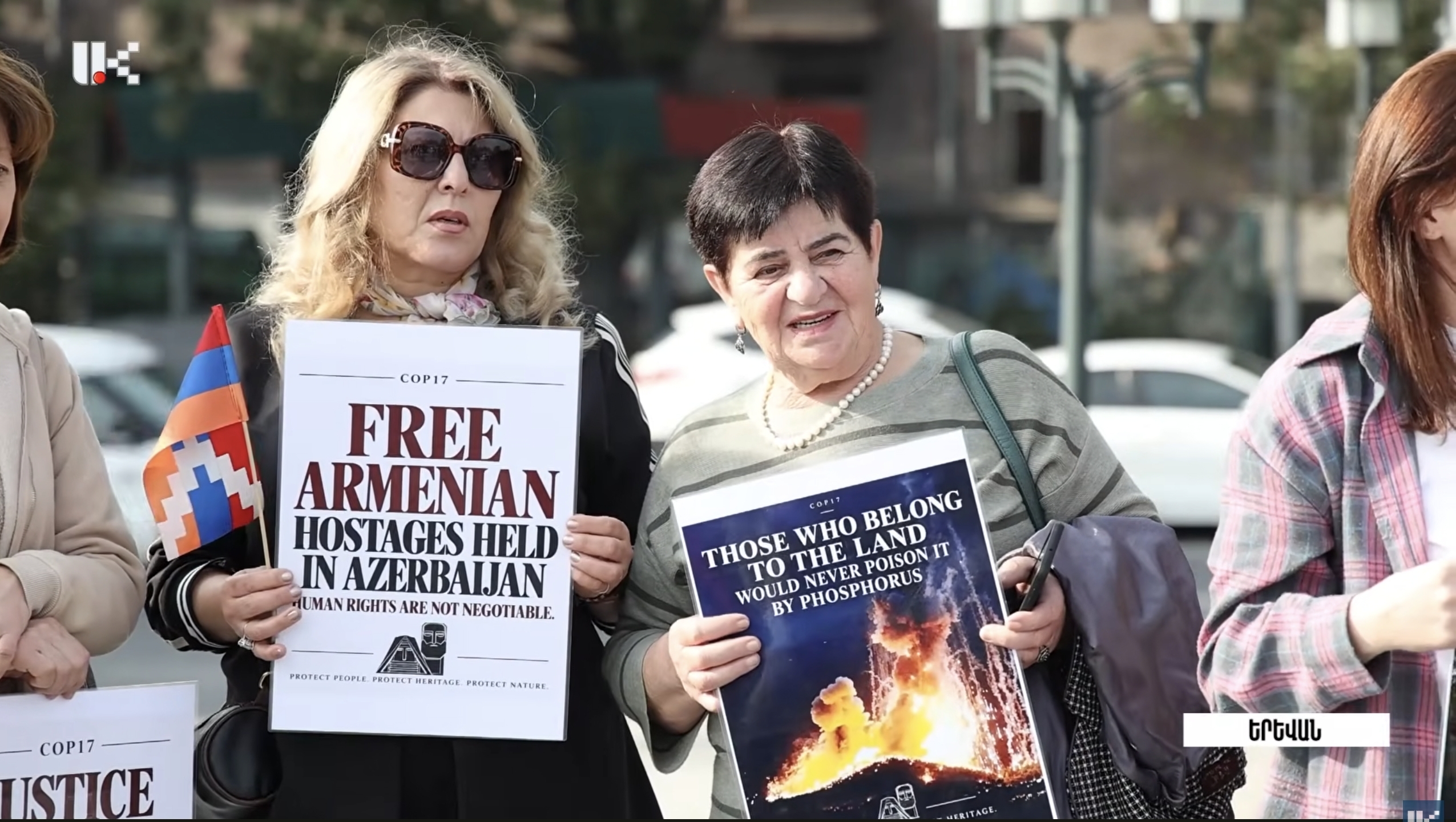 The official position of the Armenian authorities is aimed at excluding the Karabakh issue from the public agenda, Davtyan is convinced. In her opinion, obstacles to the participation of Karabakh people contradict the stated goals of the conference.
Chairman of the “Union of Artsakh” organization Artak Beglaryan reported that the organization did not receive specific explanations for the refusal. He associates it with the political position of the authorities. According to Beglaryan, issues of the rights of Karabakh people, protection of heritage, and preservation of landscapes corresponded to the theme of the conference, which included the rights of indigenous peoples. The Armenian Ministry of Environment, however, stated that the organizations' program did not align with the ecological focus of the event.
Beglaryan also mentioned that at the initiative of the “Union of Artsakh”, more than 600 applications for the restoration of property rights have been submitted to the European Court of Human Rights on behalf of 1300 Karabakh people. Another 400 applications will be prepared and submitted by the end of the year. “According to the European Convention, people have the right to return home and live in their own house,” he noted. Other forms of struggle, he said, need to be discussed with the Karabakh public.
The Armenian authorities did not raise issues of the return of Karabakh people, the release of Armenian prisoners in Baku, the destruction of cultural heritage, and environmental threats in Syunik at the conference, noted public figure Nare Simonian. “The national agenda of Armenia remained outside COP17,” she added.
Human rights defender Nina Karapetyan believes that the international community is well aware of the violations of the rights of Karabakh people, but its decisions are determined by political interests. As an example, she cited the blockade of Nagorno-Karabakh from December 2022 to September 2023: according to her, the demands of international courts to ensure movement through the Lachin corridor did not yield the expected results. Karapetyan is convinced that these issues need to be consistently raised in the legal field, even if the Armenian authorities do not help.
The ombudsman for the preservation of cultural heritage of Nagorno-Karabakh Ovik Avanesov stated that representatives of Nagorno-Karabakh were not given the opportunity to present facts of the destruction of Armenian monuments at the conference. They are documented by satellite images, photographs, videos, and reports from international research organizations, he clarified. According to him, the ombudsman’s office sent more than 30 materials about the state of heritage in Nagorno-Karabakh and Nakhichevan to UNESCO and the UN and will continue to collect facts.
Public figure Artak Mkrtchyan believes that protecting Armenian culture in Nagorno-Karabakh will be extremely difficult without a consistent state policy. He called for demanding specific steps from the Armenian authorities to protect churches and monuments.
“Much depends on the position of the Armenian authorities, as the representation of Artsakh at international venues is largely linked to political decisions. The policy of the current Armenian authorities creates obstacles for the representation of Artsakh at international venues, preservation of its cultural heritage, and protection of the rights of Artsakh people. Coordinated actions of the entire Armenian community are necessary to protect Armenian culture and rights at the international level,” he told the correspondent of “Caucasian Knot”.
Translated automatically via OpenAI from https://www.kavkaz-uzel.eu/articles/427930