

The conditions for the detention of Chechen residents at Tbilisi airport contradicted the laws.
Three natives of Chechnya, detained without explanation at Tbilisi airport, were deported back on return flights after several days, not being allowed to travel to Russia. The conditions of their stay in the transit zone, as described by the detainees, contradict Georgian laws, noted a lawyer.
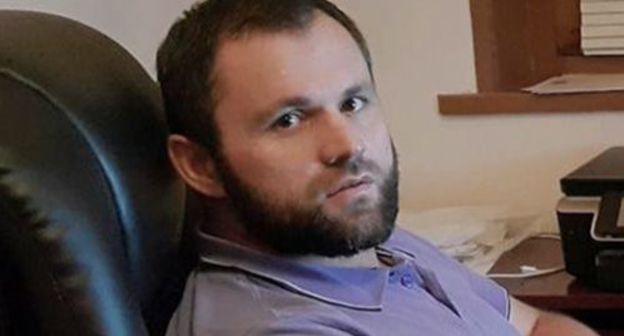
As reported by "Caucasian Knot", on October 16, it became known that three natives of Chechnya had been held at Tbilisi airport for several days, who were not allowed to enter Georgia to reach Russia via the land border. Two of them arrived on October 13 from Milan, and one on October 15 from Antalya. The detainees had their phones taken away, except for one that was managed to be hidden, and were kept "in a prison-type cell." One of these passengers explained that they had no lawyer and access to legal assistance.
For many years, Georgian border guards have been refusing entry to natives of the North Caucasus without explanation. Some received two or even three refusals, residents of Chechnya, Dagestan, and Ingushetia told "Caucasian Knot" in June 2022. In May 2023, former correspondent of "Caucasian Knot" Zhaloudi Geriyev received another refusal to enter Georgia - he linked this practice to discrimination based on origin, noting that the border guard paid attention to the information about his place of birth in his passport.
Detainees were deported from Georgia on return flights
All three Chechens - citizens of Russia, who were held for several days in the transit zone of Tbilisi airport - were deported from Georgia, one of these passengers told the correspondent of "Caucasian Knot".
"One of us was even deported earlier than expected - on the night of October 18 to Turkey, and the other two - on October 18 to Milan. At the same time, one of those who arrived in Milan was later deported from there to Russia because his visa expired. His friend had an Italian residence permit, just like the person deported to Turkey - a Turkish residence permit. Yet, no one explained to us why we were detained and deported," he said.
We did not know whether it was day or night
Speaking about the conditions of detention, the man noted that food was brought once a day. "There was water. The restroom was also normal. But we were not taken out for walks, there was no air at all, and we did not know whether it was day or night. When one of us had high blood pressure and a terrible headache the day before departure, he asked the guard for a headache pill. The guard refused to give it, even though our friend asked for an hour. The headache subsided a bit after he was given some tea - or rather not tea, but tea leaves, slightly diluted with water," said the passenger.
According to him, there was no help from airline representatives. "A representative of one airline came to us once with food and tried to assure us that we were being treated normally. One of us replied: 'How is this normal? Normal is when you are fed three times a day, and here it is once.' She got flustered and changed the subject," said the Chechen native.
For many years, "Caucasian Knot" has been recording cases of denial of entry to residents of the North Caucasus regions. For example, in 2014 and 2015, residents of Chechnya Bekhan Gelgoev, Zhaloudi Geriyev, and a doctor from Ingushetia Aslan Khadzhiev reported problems crossing the Georgian border. In 2017, Imam of the Nasyr-Kort Mosque Hamzat Chumakov was not allowed into Georgia for treatment. Denials of entry when attempting to visit Georgia were also received by residents of Dagestan. In 2008, Chechen human rights activist Natalia Estemirova was not allowed into Georgia after a direct question about her nationality.
A lawyer pointed out violations of the conditions of detention of the detainees
In the conditions in which the group of Chechens was held, it was formally possible to file a complaint through the guards, noted a Georgian lawyer, who requested not to publish his name. "But they do not always pass complaints to the right place. So it is better to document the facts for yourself and file a complaint after you leave the transit zone," he told the correspondent of "Caucasian Knot" today.
According to him, the legality of detention in the transit zone without communication and access to a lawyer depends on the details of the specific case. "The key point is on what grounds a person is held in the transit zone. If it is a standard procedure for checking documents and compliance with migration rules (for example, a person did not pass control, there are questions about the visa or documents), then the Georgian authorities have the right to organize such a stay. In this case, the norms of Georgian migration legislation apply, not just the rules of airlines. The problem arises when detention is prolonged, conditions become unbearable, or a person is completely blocked from access to legal assistance. That is when the risks of rights violations arise. International practice (including decisions of the European Court of Human Rights) emphasizes: even in the transit zone, conditions equivalent to deprivation of liberty without legal grounds should not be allowed," the lawyer pointed out.
He noted that there are no separate special norms in Georgian law regulating the conditions of detention of deportees specifically in the airport transit zone.
Judging by the accounts of these people, the prescribed norms were not followed
The general conditions of detention are regulated by the "Code on Deprivation of Liberty," noted the lawyer. "According to it, places of detention must meet the following standards: ensuring ventilation (natural or artificial), separation by gender (men and women are held separately), availability of basic amenities: beds with bedding, sinks, properly separated toilets, access to daylight, and the possibility of going outside at least once a day, three meals a day, and unlimited access to drinking water, provision of personal hygiene items. But judging by the accounts of these people, the prescribed norms were not followed," he said.
According to the lawyer, the Department of Migration of the Ministry of Internal Affairs of Georgia is directly responsible for the detention of deportees at Tbilisi airport. "The police are not responsible for their detention and security," he emphasized.
Social media users considered the incident a continuation of the practice of denying entry to Georgia
The situation with another detention in Georgia of natives from the North Caucasus was commented on by authors of some comments under the publication of "Caucasian Knot" on Instagram*.
"Georgia has often been the extreme in political matters. Because of this, they are not let in!" - expressed the opinion, in particular, geo_rus2792.
"Only women are let in," wrote treser.
"I have encountered similar actions from our 'friendly neighbors' in the past. It's not worth it, it's better not to go there even once," shared a user with the nickname jamaledilsultanov.
Georgian border guards continue to deny entry to natives of Chechnya without explaining the reasons, paying special attention to the place of birth, authors of comments on Instagram* stated in November 2025. Some of them reported receiving refusals five or more times.
The reasons behind the refusals of entry into Georgia are related to specific individuals, and the information about mass refusals to natives of the North Caucasus regions is exaggerated, participants in discussions on Facebook* suggested at that time.
Translated automatically via OpenAI from https://www.kavkaz-uzel.eu/articles/427869