

Residents of Chechnya doubted the effectiveness of reconciling divorced couples with the involvement of special commissions.
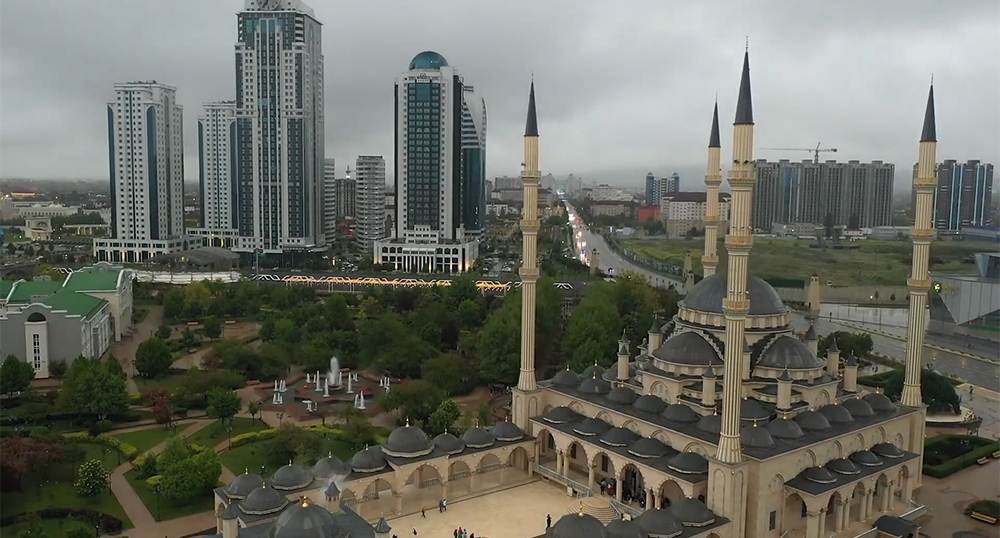
The reunification of previously divorced couples with the involvement of officials or special commissions looks like coercion of former spouses to live together. This threatens new family conflicts and negative consequences for women and children, said residents of Chechnya on social media.
As reported by "Caucasian Knot", on October 25, the authorities of Chechnya reported on the reunification of 3168 previously divorced couples. There are 5217 children being raised in these families.
Commissions for resolving family conflicts began operating in the republic in July 2017 at the initiative of the head of Chechnya Ramzan Kadyrov. Analysts interviewed by "Caucasian Knot" indicated that the reunification of divorced spouses occurs under pressure and often traumatizes people who decided to end their relationships. The head of the Spiritual Administration of Muslims of Chechnya Supyan Kurbanov reported that the commissions receive information about marriages concluded under an agreement with the civil registry authorities.
The report from the authorities of Chechnya about the reunification of 3168 divorced couples sparked debates among residents of the republic on social media. Some participants in the discussion doubted the voluntariness of the reconciliation of former spouses, suggesting that they might have been pressured.
As of 05:50 MSK on October 26, this post in the Instagram*-public chechnyatoday_95, which has about 694.8 thousand followers, received 1067 likes and 515 comments.
Discussion participants expressed doubts that all divorced couples made the decision to reconcile voluntarily.
"I am sure they reunited not of their own will, but I cannot prove it," wrote h.vahidovna.
"I am sure the girls were forced to return to their husbands from whom they left, and the guys were told: keep your wife with you, and do whatever you want on the side," suggested chameleon_ur.
"The key word is 'reunited,' not 'reconciled,'" noted bmw_owner_e39, seeing in the wording of the message an indication of third-party interference.
Other commentators criticized the interference in family relationships and shared cases where, according to them, women's opinions were not taken into account.
"Wherever I turned, I was not helped, everyone is on the side of those who have connections... But now it's too late," said liza.satueva, responding to a user who suggested seeking help in private messages.
"They don't really ask there," noted vladyagorshkova in response to a question about women returning to their ex-husbands.
"Why interfere? They always stick their noses where they shouldn't. If they left, it means they don't want to. Why force someone to be where they don't want to be, so they start to hate? Or until a tragedy happens, won't you understand that you shouldn't interfere in other people's families?" exclaimed estel.ibragimova.
Some discussion participants pointed out the risks of repeated conflicts and negative consequences for women and children if former spouses are reconciled without addressing the reasons for divorce.
"Why? People don't want to live together, why bring them back together? The children will grow up and won't thank you for your patience. What's the point of spending your life with someone you don't even want to see?" asked anisa72112.
At the same time, some discussion participants defended the work of reconciliation commissions and rejected suggestions of coercion.
"Not everyone divorces because they don't love or don't fit; sometimes it's due to misunderstandings or miscommunication, no one was forcibly returned," stated kosunov_95.
Recall that earlier, the Spiritual Administration of Muslims (DUM) of Chechnya reported that imams and psychologists participate in the work on family reconciliation.
Moreover, as early as August 2017, residents of Chechnya expressed doubts about the durability of marriages restored with the involvement of commissions. Some analysts at that time pointed out that the arguments of the clergy and references to the initiative of the head of the republic were perceived by divorced spouses as pressure. In February 2023, analysts identified coercion as a significant factor in the practice of family reunification, noting the risk of re-traumatizing former spouses.
Translated automatically via OpenAI from https://www.kavkaz-uzel.eu/articles/427797