

The authorities of Chechnya have involved entrepreneurs in the fight against car tinting.
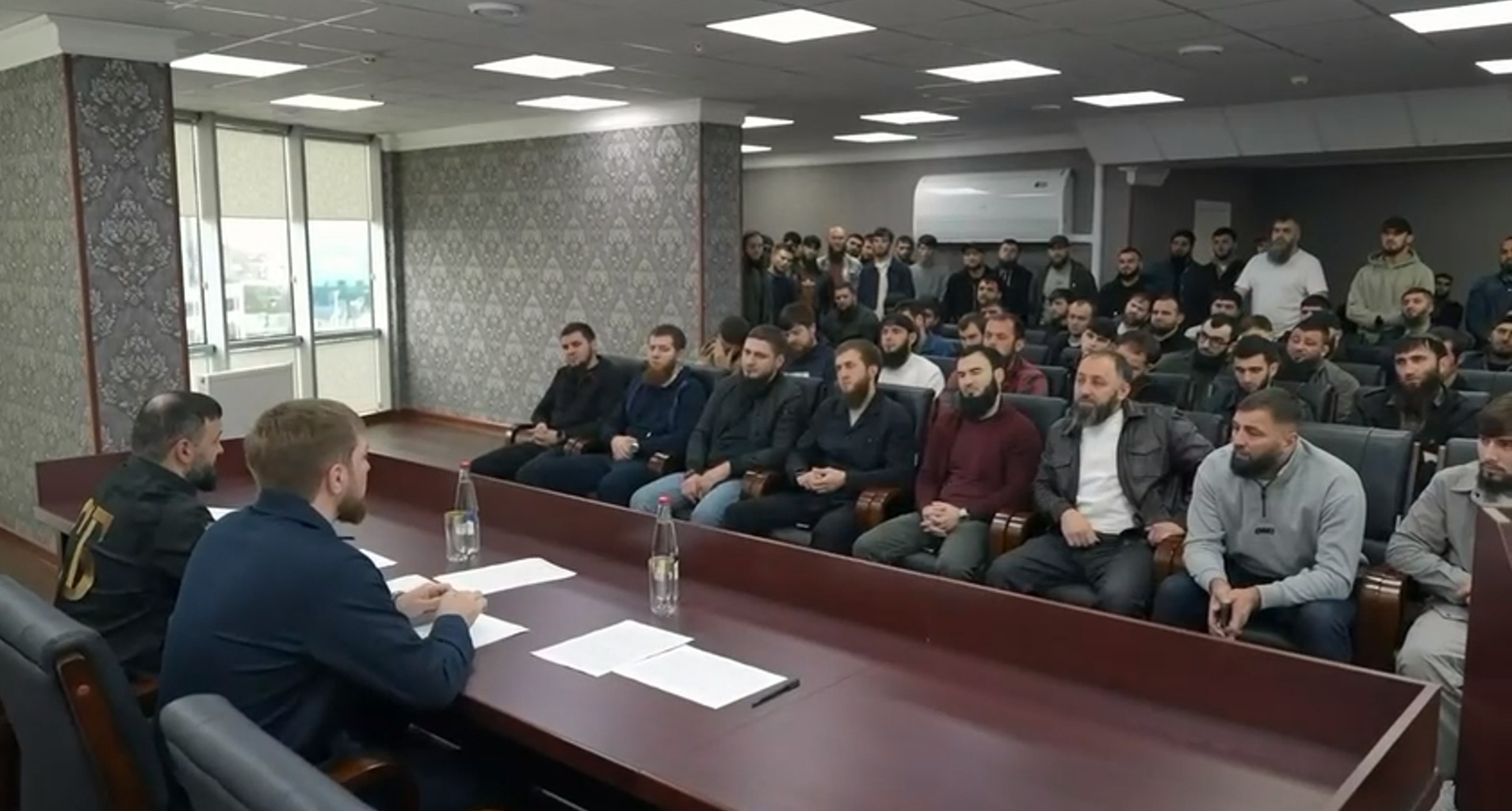
Representatives of the Chechen Security Council gathered the owners of detailing centers and warned them about the ban on tinting clients' cars. This meeting became an episode in the years-long struggle of the authorities against the tinting of cars belonging to ordinary residents of the republic.
As reported by "Caucasian Knot", in May, a resident of Chechnya who sold removable tinting through social networks was publicly reprimanded. Social media users then felt that the attention of the security forces to the incident did not correspond to the scale of the offense.
A complete ban on car window tinting in Chechnya was introduced in 2013. "Tinting is prohibited in any form in our region," said Ramzan Kadyrov in 2016. Raids, during which drivers are forced to remove tinting film from their car windows right on the road, have become a common practice for Chechen security forces over the years. The authorities of Chechnya explain these actions, what outrages drivers, and what the legal procedure for removing the film is, as described in the reference "Caucasian Knot" "How Chechnya fights against car tinting".
The Security Council of Chechnya warned detailing centers about the ban on illegal car tinting, reported the state news agency "Grozny-inform" on October 24.
A meeting was held at the agency with the owners of detailing centers that provide car care and additional equipment services, according to a publication on the republic's Security Council Telegram channel.
"During the meeting, special attention was paid to the inadmissibility of providing services that violate the requirements of the legislation of the Russian Federation, in particular, regarding the tinting of car windows in violation of established norms, as well as the installation of special light and sound signals, including strobe lights, without the legally prescribed grounds and permits," the message notes.
Representatives of the authorities pointed out to the meeting participants the "inadmissibility of providing services that contribute to violations of legislation," reminding them of the "importance of a responsible approach from the owners of specialized organizations and compliance with established requirements when providing services to car owners."
The publication is illustrated with a video montage made from recordings of the meeting. The video is accompanied by music, and the words of the meeting participants are not audible. The footage shows that several dozen men of different ages are present in a small hall - many of them lacked chairs and are standing near the wall of the room.
As of 05:50 Moscow time, there are 10 comments under the Security Council's publication. Their authors posted emojis indicating support or concise phrases with words of approval.
Readers of "Caucasian Knot" criticized the methods of fighting against tinting
Readers of "Caucasian Knot" have repeatedly reported that the ban on tinting does not apply in Chechnya to representatives of the authorities and their entourage. In particular, this was reported on May 5 by a reader with the nickname sheldon_trantow.
"Both the sale of tinting and its installation on cars in Chechnya is allowed only for 'their own'. No employee of the 'authorities' will come to check auto shops owned or controlled by someone from the powerful, just as no one will dare to remove the tint from a car driven by relatives, acquaintances, fellow villagers, and friends of those in power, their family members, etc. All these 'laws' and 'rules' apply to ordinary people," - he wrote in his comment.
A reader with the nickname oma reported the same the day before. "It [tinting] is allowed only for the entourage of the head, officials, and security forces of various levels. In any case, the 'guardians of order' never have any questions for them. Just as no one has any questions for those with cars with 'KRA' plates [an abbreviation for 'Kadyrov Ramzan Akhmatovich', used by supporters of the head of Chechnya. - Note from "Caucasian Knot"], 'EEE' and so on, which are clearly associated with certain structures. But a simple unfortunate person in an old 'Lada' can be harassed even for having a curtain on the side window," - he wrote.
This was confirmed by a reader with the nickname andreas.blick. "Some time ago, I was driving with a friend to the funeral of our mutual acquaintance. And he had curtains on the rear windows. He often takes his elderly mother to hospitals and pharmacies for medicine, and she has asthma and cannot tolerate bright light. We ran into another raid against tinting and LED lamps. Naturally, the security forces picked on him, saying that curtains on windows, like tinting, are prohibited, and must be removed immediately. The person explains the situation, but no one wants to listen. Remove it, and no discussions! At that moment, a certain 'madam' drives past us in an expensive SUV, with the front window tinted almost black, and I see her chatting on the phone, I ask one of the vigilant officers why this obvious violator is not being detained. The response was, 'It's none of your business, you take care of yourself!'. They took the curtains from my friend and threw them into a common pile on the roadside, where there were similar ones, plus the torn tinting film and several broken LED lamps," - he wrote on May 4.
Raids by security forces are called an example of double standards in Chechnya
In November 2025, during another raid on the roads of Chechnya, security forces removed tinting from cars. At the same time, in the published videos, it was visible that the security forces themselves arrived at the raid in cars with tinted windows.
These raids can be considered a vivid example of double standards operating in Chechnya, political scientist Ruslan Kutaev pointed out at that time. "They remove tinting from the cars of ordinary people, but their cars with tinting are parked nearby. Ordinary people see this and feel humiliated. They show that in Chechnya, not everyone is equal," he told "Caucasian Knot".
"In Chechnya, there has long been an unspoken hierarchy: security forces, officials, and those close to Kadyrov can do anything, ordinary citizens can do nothing. Tinting, license plates, speeding - all this is allowed for 'their own' and prohibited for 'others'. And all this is justified by security measures, although no security considerations justify it," - confirmed a human rights defender familiar with the realities of Chechnya at that time.
Chechen security forces regularly conduct raids on the roads against car tinting. Drivers complained that they are forced to remove tinting film from all windows of the car right on the road, and in the Gudermes district in June 2020, cars were taken to the impound lot if tinting film was noticed on the windows. In October 2017, local residents reported that security forces not only demanded to remove the film but also smashed the tinted windows of cars.
Ramzan Kadyrov's nephew Idris Cherkhigov, who headed the traffic police in Chechnya in October 2017, publicly classified improper tinting as a serious violation of traffic rules in June 2020. At the same time, Chechen officials and Ramzan Kadyrov himself drive in tinted cars.
Translated automatically via OpenAI from https://www.kavkaz-uzel.eu/articles/427772