


Agrarians in southern Russia have been forced to lower the selling prices of grain.
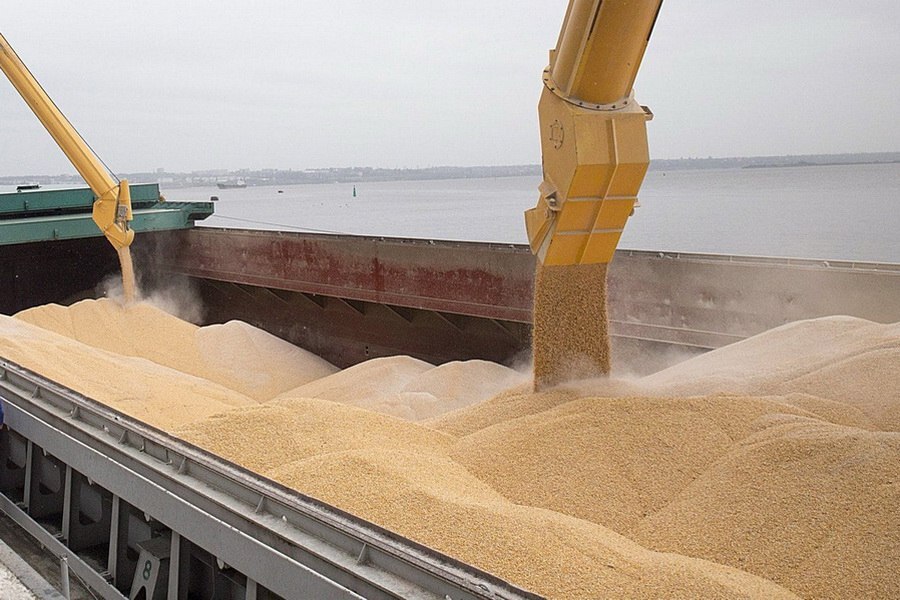
As reported by "Caucasian Knot", the diesel fuel shortage has led to losses during the harvest, and the purchase prices for grains are below cost, Stavropol farmers said. Maritime exports from southern Russia have faced problems, and shipments through the Baltic or Far Eastern ports seem unrealistic. Ultimately, the current situation may lead to a series of bankruptcies among agricultural producers, analysts indicated.
The suspension of grain terminal operations in Novorossiysk after drone attacks will lead to a significant reduction in grain exports and increase the risks of bankruptcy for agricultural producers amid constantly falling grain prices, analysts noted. The operator of the grain terminal KSK in Novorossiysk announced the suspension of operational activities. Earlier, two other terminals located in the Novorossiysk port were also suspended.
Grain prices have fallen below cost
Grain prices have sharply declined, said the director of the Grain Union of Agricultural Producers of the Rostov Region Anatoly Kolchik.
"I have heard offers for 6 rubles per kilogram – depending on the area and logistics, the price varies from 6 to 12 thousand per ton. As a result, for most farms, the price turns out to be below cost. Those who managed to sell at the beginning of purchases at a more acceptable price are in the minority, and their volumes are small. Many farms are forced to sell grain even for 7 rubles per kilogram to pay salaries, buy fuel, spare parts, and prepare for the autumn sowing. I know of cases where farmers are already putting their farms up for sale. A good harvest does not bring joy because there is no opportunity to sell it. Some do not even have storage space – sales were made right in the middle of the harvest, and warehouses were prepared for sunflower and corn. Now part of the harvest is stored outdoors," quoted him "Expert South".
Some farms could not stop harvesting and were forced to buy diesel fuel at inflated prices. Farmers and medium-sized farms, which do not have their own oil storage tanks and internal refueling stations, faced particularly difficult conditions.
According to Kolchik, compared to last year, the price of grain will be 40-50% below cost. This noticeable difference was influenced, among other things, by the fuel crisis.
"At the beginning of the harvest, the price of fuel reached double the increase compared to April. The authorities announced assistance when the problem had already arisen. With joint efforts from regional profile departments and oil companies, the situation was adjusted, but some farms could not stop harvesting and were forced to buy diesel fuel at inflated prices. Farmers and medium-sized farms, which do not have their own oil storage tanks and internal refueling stations, faced particularly difficult conditions. Many did not receive preferential loans – this is a well-known fact," explains the head of the Don Grain Union.
Agrarians are mass listing grain from the 2026 harvest on trading platforms – from specialized agricultural services to public bulletin boards. A significant portion of the offers is at prices below cost. While producing a kilogram of grain costs about 10-12 rubles, ads increasingly feature prices from 6 to 9 rubles – and in some cases, sellers are willing to give away batches for next to nothing, writes "Bison-Agro-News".
From August 1 to 10, Russia shipped 976.4 thousand tons of major grains for export, which is 22.2% less than in the same period last year, reported "Interfax" citing monitoring from the Russian Grain Union. In particular, wheat shipments decreased by 18.1% to 801.5 thousand tons, barley by 30% to 146.5 thousand tons, and corn by 2.4 times to 28.3 thousand tons.
"Against the backdrop of falling export volumes, a significant reduction in the number of companies exporting wheat has been recorded. This season there are 11, compared to 27 a year ago," compared the director of the analytical department of the union, Elena Tyurina. In the first decade of August, grains and legumes were sent abroad only through eight ports, while last season at this time, it was through 29. Traditionally, Novorossiysk leads in volumes, with a noted increase in shipments of 12% to 775.3 thousand tons.
"If the current geopolitical situation persists, further reductions in shipments are quite possible. This is despite the fact that the price of Russian wheat (4th class, FOB Novorossiysk) currently has the maximum discount in the last two years compared to the European price – $38 per ton. A year ago, this figure was $5," she noted.
"The reduction in demand from exporters has led to a 2.5% decrease in prices for producers over the decade, bringing them to 11.9 thousand rubles per ton compared to 12.2 thousand rubles/ton at the beginning of August. In dollar terms, the decline was 6.2% to $144 per ton. Under these conditions, profitability in production is decreasing, which does not rule out a future reduction in areas under wheat crops," Tyurina suggested.
Analysts proposed diversifying grain exports
The ports of the Caspian Sea are closer, but they are less capacious and do not have access to the ocean, which will limit the redistribution of the harvest in the Caspian basin.
Baltic ports have already increased grain exports by 22% in the first half of the year, and grain is becoming one of the drivers of business for northern ports, believes Alla Yurova, senior director of the ratings of non-financial companies at the NRA rating agency.
"The ports of the Caspian Sea are closer, but they are less capacious and do not have access to the ocean, which will limit the redistribution of the harvest in the Caspian basin. Transportation to the Far East incurs more significant logistical costs, so less grain will go to Far Eastern ports than to the Baltic," her words are quoted by "Vzglyad".
It will not be possible to quickly replace Novorossiysk and Taman with other directions. The export logistics of grain from southern Russia has historically been built around the Azov-Black Sea basin. Here are the main producing regions, deep-water terminals, and infrastructure for large volumes, believes Roman Koposov, deputy director of the strategic consulting company "ARB Pro".
One of the working options is the international transport corridor "North-South" through Azerbaijan and further to Iran.
"The three key Novorossiysk terminals handled about 8.4 million tons of grain in the first half of the year, while the entire Baltic basin handled about 1.2 million tons during the same period. The Baltic, Caspian, and Far East can accept part of the cargo flow, but they cannot replace the southern ports in a short time," his words are cited in the publication.
Land logistics can also partially help. "One of the working options is the international transport corridor "North-South" through Azerbaijan and further to Iran. Russian Railways is already providing significant discounts on grain transportation in this direction. But the land route is more complicated than the sea. The transport distance increases, the number of operations rises, and dependence on the capacity of the railway and border infrastructure increases. Therefore, alternative logistics will likely be more expensive than the usual shipping through the Black Sea," says Koposov.
Experts consider a reduction in exports in August to be almost inevitable. In August, the global market may miss half of Russian grain, believes Yurova.
Russian Railways sent 1.5 million tons of grain abroad in July, 1.8 times more than in July last year. This includes shipments to ports – 992 thousand tons (growth of 1.8 times). The largest volume (936 thousand tons, growth of 1.8 times) was sent through southern ports. 11 thousand tons were shipped to the Northwest ports (-48%), and 45 thousand tons to the Far East (growth of 5 times). Through land border crossings, 512 thousand tons were sent (growth of 1.7 times). In July, a total of 2.1 million tons of grain were loaded on the Russian Railways network (+37%).
The highest loading of railways with grain in July was provided by the Stavropol Krai (289 thousand tons, +30.9%), followed by the Volgograd region (244 thousand tons, growth of 2.9 times), and the Rostov region (220 thousand tons, growth of 3.7 times), reports "Agroconsult".
The statistics were collected on the day of the drone strike on Novorossiysk, after which the terminals in the port stopped working.
Dagestan farms faced a locust invasion
For Dagestani farmers and agricultural producers, the invasion of locusts has become a problem. "The birth of Asian locust larvae has indeed been recorded in Dagestan, with their presence noted mainly in the northern zone," noted the acting Minister of Agriculture of the Republic Ivan Golub in his Telegram channel.
He reported that a huge number of swarms of Asian locusts were recorded in the territory of the village of A. Nevsky in the Tarumovsky district, which could harm the crops. Ground transport and air ambulance were promptly sent to the location to treat the areas of pest spread. After treatment, a massive die-off of locusts is being recorded, the official noted. At the same time, he pointed out that the main breeding sites are in the floodplains and protected areas, where the use of chemical treatment is categorically prohibited by law. As a result, the pest matures and flies to agricultural land.
Translated automatically via OpenAI from https://www.kavkaz-uzel.eu/articles/425828





![Tumso Abdurakhmanov. Screenshot from video posted by Abu-Saddam Shishani [LIVE] http://www.youtube.com/watch?v=mIR3s7AB0Uw](/system/uploads/article_image/image/0001/18460/main_image_Tumso.jpg "Tumso Abdurakhmanov. Screenshot from video posted by Abu-Saddam Shishani [LIVE] http://www.youtube.com/watch?v=mIR3s7AB0Uw")