


Activists called for the creation of a museum of the Military-Georgian Road at the site of the station in Balta.
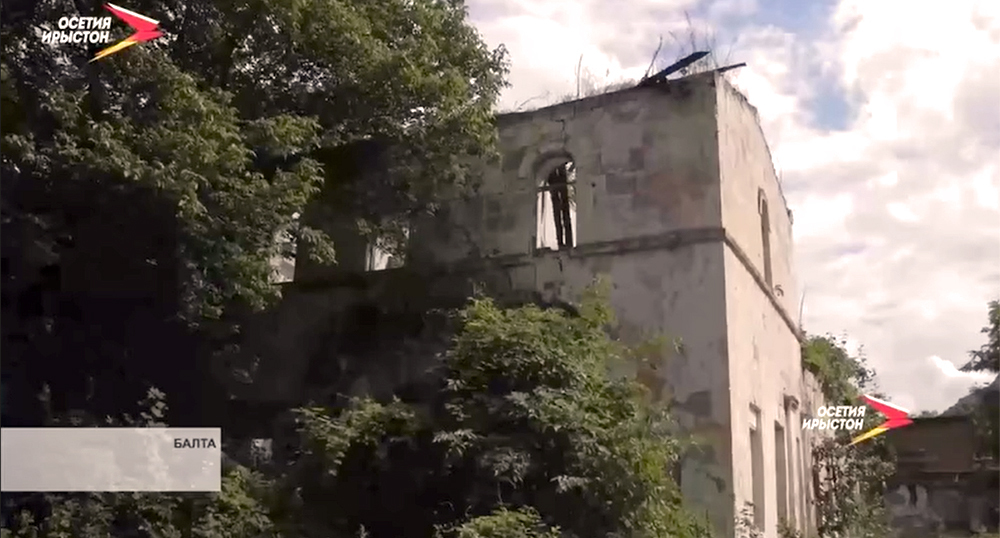
The post station in the village of Balta in North Ossetia served as a hub in the 19th century, and many famous personalities, including Pushkin, stopped there. North Ossetian activists called for the establishment of a museum of the Military-Georgian Road at the site of the station.
A video report on the activists' call to preserve the 19th-century post station "Balta" and turn it into a museum of the Military-Georgian Road was published on August 15 on the website of the "Ossetia-Iriston" TV channel.
The buildings of the post station "Balta" are located on the left bank of the Terek River in the village of Balta in the Zaterechny district, eight kilometers south of Vladikavkaz. The station was built in 1861.
One and a half centuries ago, travelers on the Military-Georgian Road stopped at this station to rest. At that time, it was a true island of safety amidst the harsh mountains, and a company of soldiers guarded the tranquility of the route. Today, only bare stone walls remain of the cozy building, the journalist of the channel Fatima Dzadzoyeva reported in the video.
Activists proposed to restore the historical appearance of this place. The Military-Georgian Road is located just a few dozen meters from the station, noted a member of the expert council of the North Ossetian Tourism Industry Workers Association Garry Cherdzhiev.
"This area has all the necessary opportunities for the development of a wonderful cluster, a beautiful place. There is space for catering, and there is space for any, even large, exhibition in the museum. And most importantly, there is an endless history of the Military-Georgian Road," he said in the video footage.
Fatima Dzadzoyeva read an excerpt from Alexander Pushkin's book "Journey to Erzurum during the Campaign of 1829": "In Balta, I found a post house and met General Yermolov there." The journalist noted that the Balta post station has seen so many celebrities that it rightfully can be considered the main cultural hub of the Caucasus in the 19th century.
Trees that are contemporaries of the building grow near the station. The hospitality of Balta was governed by strict military rules. The station was a key link in the chain of Caucasian fortifications, the journalist noted.
The station was built in Balta because it was the first fortification from Vladikavkaz, explained the deputy director for research at the Federal State Budgetary Institution "Protected Ossetia-Alania" Konstantin Popov. "The Balta station was built on the left bank terrace of the Terek. The capital buildings are two-story. Nearby were buildings: a stable, barns," he noted.
In the video footage, Popov demonstrated photos published in the album by Sergey Alagaty "Tourist Roads of Ancient Iryston." They allow a detailed look at the bygone era. "The lanterns were protected from the wind. Lanterns on such a sign as a milestone, such a striped one," he described how the station used to look.
"Caucasian Knot" also reported that the issue of preserving historical objects had previously attracted the attention of the residents of North Ossetia. In November 2020, activists pointed out the threat to ancient buildings in the village of Dagom due to modern construction. In December 2021, the publication reported on the restoration of the Zrug temple in the Alagir district, part of which had previously collapsed due to river erosion.
Translated automatically via OpenAI from https://www.kavkaz-uzel.eu/articles/425818





![Tumso Abdurakhmanov. Screenshot from video posted by Abu-Saddam Shishani [LIVE] http://www.youtube.com/watch?v=mIR3s7AB0Uw](/system/uploads/article_image/image/0001/18460/main_image_Tumso.jpg "Tumso Abdurakhmanov. Screenshot from video posted by Abu-Saddam Shishani [LIVE] http://www.youtube.com/watch?v=mIR3s7AB0Uw")