


The number of flooded houses in Dagestan has dropped to 54.
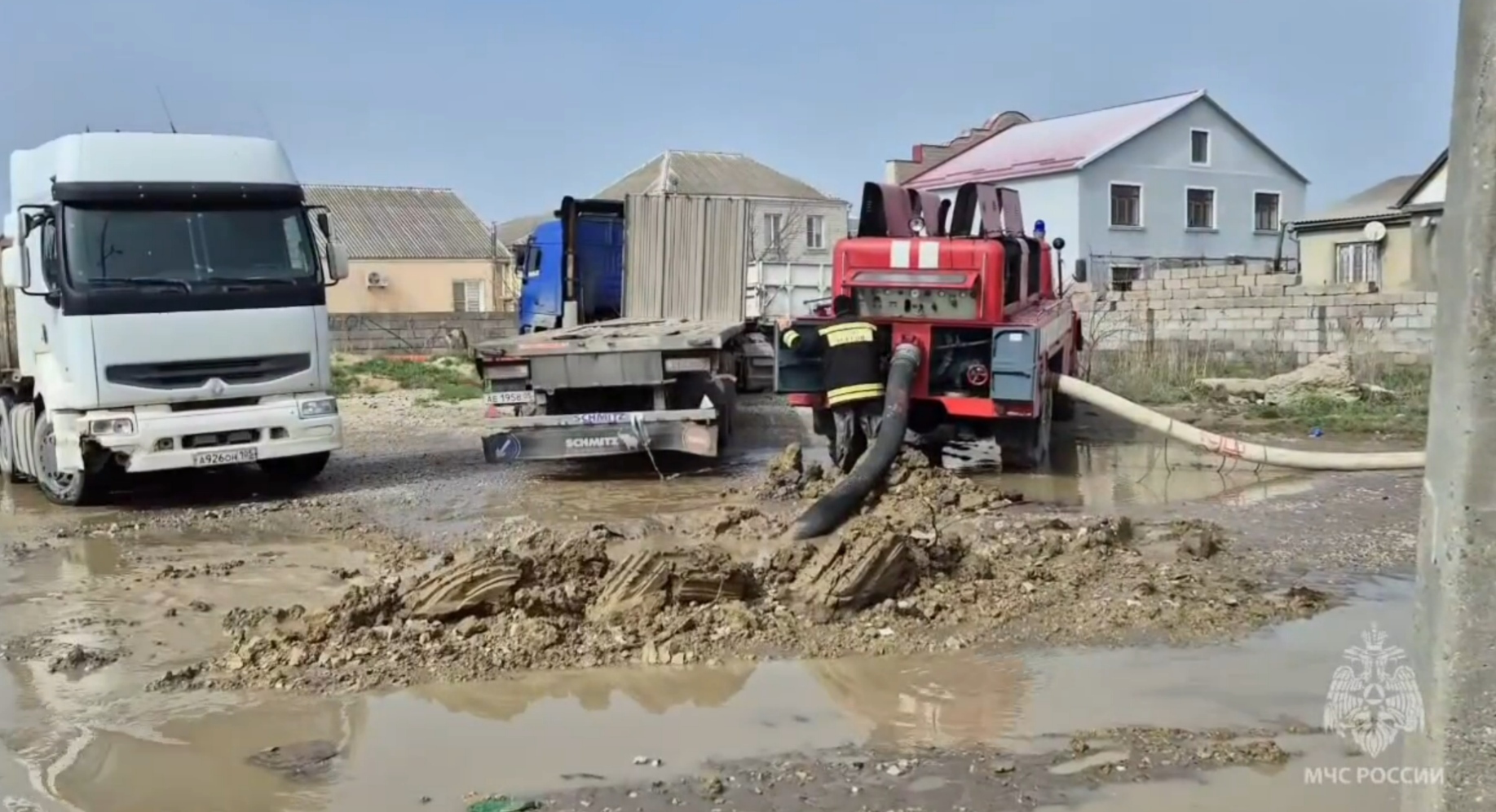
The number of flooded residential buildings in Dagestan has more than halved in the past 24 hours. 544 people are in temporary accommodation centers.
As reported by the "Caucasian Knot," 508 residential buildings remained flooded in Dagestan on April 14, and 120 on April 17. On the morning of April 18, 117 residential buildings, 122 garden plots, and six sections of roads remained flooded in the republic. 537 people, including 159 children, were in 15 temporary accommodation centers.
About 1.5 million residents of Dagestan were caught in the devastating flood zone. Six residents of the republic, including three minors, died as a result of the flooding. In addition, on April 13, 19-year-old volunteer Artem Mikhrabov, who suffered a severe head injury while helping residents of the flooded village of Mamedkala, died in the hospital.

The number of flooded residential buildings in Dagestan has dropped to 54, the Ministry of Emergency Situations reported today. "In four populated areas, 54 residential buildings, 59 garden plots, and three sections of roads remain flooded," TASS quotes the ministry as saying.
According to the ministry, 544 people, including 170 children, are in 15 temporary accommodation centers, the publication states.
From April 12 to 18, landslides destroyed 28 houses in the Dakhadaevsky District, and another 127 were partially damaged. About 200 people were evacuated.
According to the weather service of the "Caucasian Knot," today in Makhachkala there will be partly cloudy skies with no precipitation. Rain is also not expected on the night of April 20th. The weather service is a partnership between the "Caucasian Knot" and Gismeteo. The service allows you to correct meteorological data for a more accurate forecast. The service is also available in a light version and in Caucasian Knot apps for Android and AndroidGO.
In the North Caucasus, floods caused by torrential rains began in late March and have become some of the most destructive in recent years. Dagestan and Chechnya suffered the most from the disaster, according to the "Caucasian Knot" report "Spring flooding in the North Caucasus-2026".

As a reminder, the Institute of Geography of the Russian Academy of Sciences linked regular flooding in Dagestan to a combination of natural processes and anthropogenic impacts, which exacerbate the scale of natural disasters. In particular, development on river floodplains, deforestation, and the disregard for water protection zones "literally multiply the consequences" of flooding, which under other conditions could have been relatively calm, noted Doctor of Geographical Sciences Alexey Gunya.
Dagestani analysts interviewed by the "Caucasian Knot" also named ill-considered development, natural factors, and the deplorable state of hydraulic structures among the causes of the devastating flooding. At the same time, they unanimously considered the volunteers' contribution to the fight against the consequences of the flood to be significant.
The Caucasian Knot compiled materials about flooding in the republics of the North Caucasus Federal District in the spring of 2026 on the thematic page "Flooding in the North Caucasus".
Translated automatically via OpenAI from https://www.kavkaz-uzel.eu/articles/422572



![Tumso Abdurakhmanov. Screenshot from video posted by Abu-Saddam Shishani [LIVE] http://www.youtube.com/watch?v=mIR3s7AB0Uw](/system/uploads/article_image/image/0001/18460/main_image_Tumso.jpg "Tumso Abdurakhmanov. Screenshot from video posted by Abu-Saddam Shishani [LIVE] http://www.youtube.com/watch?v=mIR3s7AB0Uw")