


The decision to deport journalist Sadygov from Georgia has outraged human rights activists.
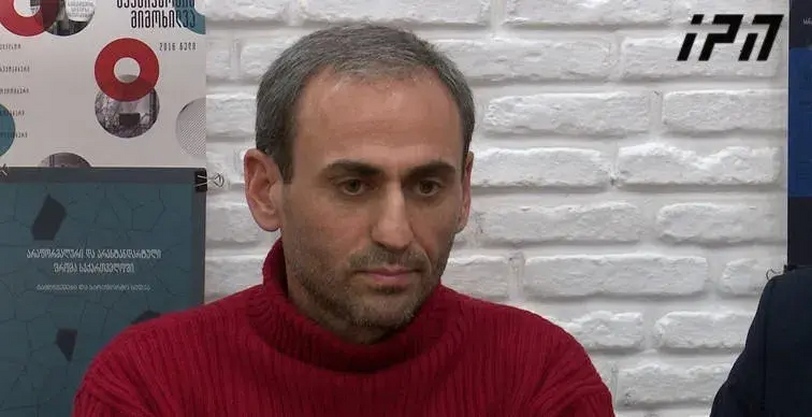
A Tbilisi court has ordered the deportation of Azerbaijani journalist Afgan Sadigov to his home country. This decision conflicts with the ECHR's ban on his extradition to Azerbaijan, human rights activists noted.
As reported by "Caucasian Knot," Azerbaijani journalist Afgan Sadigov, who spent a long time in a Tbilisi pretrial detention center, regularly participated in protests by Georgian residents after his release. In January, a Tbilisi City Court judge dismissed Sadigov's administrative case, finding evidence of a criminal offense, and handed the case over to the police. Thus, there is a risk of criminal prosecution for the journalist, stated the human rights organization "Center for Social Justice."
In the fall of 2025, Afgan Sadygov served several administrative arrests for participating in blocking the streets of Tbilisi. Thus, on October 23, 2025, Sadygov was sentenced to 14 days of arrest and received 54 fines totaling almost $100,000.
The deportation decision was made at a night court hearing
Afgan Sadigov was detained late in the evening on April 4 and taken to the Tbilisi City Court, the journalist's wife, Sevinj Sadigov, who is currently in France with her children, told a "Caucasian Knot" correspondent today.
According to her, the basis for the detention was an administrative case against Sadigov. Around 4:00 a.m. (around 3:00 a.m. Moscow time), the court ruled to deport Afgan Sadigov to Azerbaijan.
The man is being extradited to a country where he faces imprisonment and torture.
"The authorities of Azerbaijan and Georgia have rigged a game against Afghan." Azerbaijan initially closed the criminal case against Afgan on April 1. It now emerges that this was done so that the Georgian authorities would have a formal pretext to claim they were not violating the ECHR ruling banning Afgan Sadigov's extradition until the Strasbourg Court's final decision on his case. But what difference does it make whether extradition is deportation? A person is extradited to a country where he faces imprisonment and torture. If deportation were the issue, they could have given him the opportunity to leave freely, and human rights activists would have helped him travel to another country to join us, to be with his family," Sadigova said, adding that by 9:30 a.m. (8:30 a.m. Moscow time) she had no information about her husband's fate.
On February 28, 2025, the ECHR banned Georgia from extraditing Sadigov to Azerbaijan until a decision on the merits of the case was rendered. On April 16, a Tbilisi court released Sadigov on bail, complying with the ECHR ruling.
Sadigov's detention was motivated by criticism of the Georgian police.
The court's decision to deport Afgan Sadigov was confirmed by Tamta Mikeladze, head of the Center for Social Justice, which provides legal defense for the Azerbaijani journalist.
According to her, the formal basis for Sadigov's detention was his social media post criticizing the Georgian police. However, as Mikeladze noted, a letter from the Supreme Court of Georgia stating that Afgan Sadygov poses a "threat to Georgia's national security" was attached to the case file.
Judge Tornike Kochkiani denied any of our motions during the trial.
"The court ruled to deport Afgan Sadygov to Azerbaijan at 4 a.m. Judge Tornike Kochkiani denied any of our motions during the trial. Even the binding European Court ruling was not attached to the case file. The court ignored the fact that Afgan Sadygov's wife and children have political asylum in Europe, and that country could also have granted him asylum. Accordingly, we argued that he could have voluntarily left the country, and the court should have given him that opportunity," Tamta Mikeladze wrote on Facebook*, which she translated into Russian. Caucasian Knot correspondent.
According to Mikeladze, human rights activists "were prepared to promptly submit the relevant documents to both the court and the Migration Department." "Throughout this entire time, it was the Georgian Dream authorities who prevented Afgan Sadygov from leaving Georgia, which is why it was previously formally impossible to begin asylum procedures," she wrote.
Everything was pre-planned and organized by two authoritarian regimes.
The human rights activist chronicled the actions taken to enforce the court's decision to deport Afgan Sadygov to Azerbaijan. According to her, on April 1, Azerbaijan suspended the criminal prosecution against Sadygov and notified Georgia of this. On April 2, this information was communicated to Afgan Sadygov. On April 3, the court overturned the decision on bail and travel restrictions against him. On April 4, Afgan Sadigov was detained and will likely be handed over to Azerbaijan today. "Everything was pre-planned and organized by two authoritarian regimes," Mikeladze stated.
The "Caucasian Knot" has no comment from Azerbaijani or Georgian law enforcement agencies regarding Sadigov's situation or Tamta Mikeladze's statement.
Azerbaijan demanded Sadigov's extradition back in 2024.
As a reminder, Afgan Sadigov arrived in Georgia with his family in December 2023 for medical treatment, but remained there due to the crackdown on human rights defenders, journalists, and activists in Azerbaijan. On July 17, 2024, Georgian border guards prevented Sadigov from flying to Turkey, explaining that he could only return to his homeland. Sadygov said he had already received threats in Georgia from "people from Azerbaijan." Sadygov's family was able to leave Georgia and go to a European country.
Azerbaijan demanded that Georgian authorities extradite Sadygov, and the journalist was placed under arrest. On September 20, 2024, he went on a hunger strike in a Tbilisi pretrial detention center to protest his arrest and denial of political asylum. He only ended his hunger strike in January 2025.
Journalists from a number of media outlets, including Abzas Media, Meydan TV, Toplum TV, and Kanal-13, have been persecuted in Azerbaijan. The "Caucasian Knot" report "Serial Arrests of Journalists in Azerbaijan" details the events that led to the new wave of repression against the independent press.
On March 3, 2026, the Council of Europe's platform for the protection of journalism and the safety of journalists released a report that found Azerbaijan among European countries with a high level of criminal prosecution of journalists. Of the 148 journalists held in prison at the end of 2025, 36 were in Azerbaijan.
In 2024, the number of political prisoners in Azerbaijan reached its highest level in the country's 23 years of membership in the Council of Europe, according to the "Caucasian Knot" report "Key Points on the Record Number of Political Prisoners in Azerbaijan." At the same time, the Azerbaijani authorities deny the existence of political prisoners in the country.
Translated automatically via OpenAI from https://www.kavkaz-uzel.eu/articles/422200




![Tumso Abdurakhmanov. Screenshot from video posted by Abu-Saddam Shishani [LIVE] http://www.youtube.com/watch?v=mIR3s7AB0Uw](/system/uploads/article_image/image/0001/18460/main_image_Tumso.jpg "Tumso Abdurakhmanov. Screenshot from video posted by Abu-Saddam Shishani [LIVE] http://www.youtube.com/watch?v=mIR3s7AB0Uw")