


Azerbaijan is ready to expand energy cooperation with the EU amid the war in Iran.
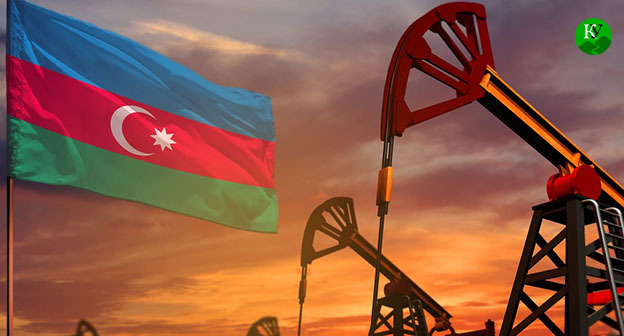
Azerbaijan's ability to rapidly increase gas production and exports is limited by the capacity of existing fields and the Southern Gas Corridor, but the European Union can ensure its energy sustainability in the coming years by participating in Azerbaijani projects, including in "green energy."
As "Caucasian Knot" reported, Azerbaijan is distancing itself from the conflicting parties in the Middle East, ensuring stable oil flows through its territory, and expects to profit from rising global oil prices, analysts previously noted.
On February 28, Israel and the United States began strikes on Iran. Donald Trump announced the start of a large-scale military operation. In response, Iran launched shelling attacks on Israel, American military facilities, and civilian targets in the Middle East, according to the Caucasian Knot report "The Main Impact of the Military Conflict with Iran on the Caucasus." On March 2, Iran announced the closure of the Strait of Hormuz, which handles 15% of global oil exports and 20% of liquefied natural gas (LNG), to vessels associated with hostile countries.
Ilham Shaban, head of the Caspian Barrel Oil Research Center, Togrul Juvarli, an expert at the Turan analytical service, and Natig Jafarli, co-founder of the Republic Research Center and head of the political committee of the Republican Alternative party, commented on the prospects for increasing Azerbaijani gas supplies to Europe to the Caucasian Knot.
Azerbaijan lacks the available resources to quickly and significantly increase gas exports to Europe and compensate for supply disruptions from the Middle East. By the end of 2026, Azerbaijan could supply Europe with a maximum of half a billion cubic meters of natural gas in addition to the already planned volumes, Ilham Shaban told a Caucasian Knot correspondent.
As the analyst explained, Azerbaijan currently has objectively limited production capacity. "The Shah Deniz field reached a plateau in 2024-2025, that is, peak gas production of 27.8 billion cubic meters per year. The field will not produce more than this volume annually. In addition, the Umid field currently produces 2.5 billion cubic meters per year, the Absheron-1 field 1 billion cubic meters, and the state oil company SOCAR independently produces another 7.8 billion cubic meters. The country's annual demand is 13.2 billion cubic meters of gas. Therefore, 25.2 billion cubic meters of gas are exported, including 12.8 billion to Europe, and the rest to Turkey, Georgia, and Syria. All the remaining gas produced in the country - including the remaining 2.6 billion cubic meters from Shah Deniz, as well as fuel from the Umid and Absheron-1 fields and SOCAR's facilities, “They remain to meet Azerbaijan’s own needs,” Shaban said.
In 2026, the Southern Gas Corridor is expected to pump approximately 12.8 billion cubic meters of gas, approximately the same as last year, he indicated.
“There are no other available volumes. Perhaps another 500 million cubic meters could be added through the development of deep-lying formations in the Azeri-Chirag-Guneshli oil project this year, but that represents 0.1% of the European gas market. Another 200 million cubic meters of gas will be freed up with the recent launch of the Khizi-Absheron wind farm—and that’s the maximum Azerbaijan can supply to Europe in 2026. In 2027, export capacity to Europe will likely also reach around 13.5 billion cubic meters,” Shaban predicted.
Increasing production is a matter of years
In his opinion, additional gas volumes in Azerbaijan will only appear in 2028, when the Umid-2 project will begin producing another 1 billion cubic meters. gas, and production from deep-seated formations of the Azeri-Chirag-Guneshli (ACG) oil project will also be increased to 1 billion cubic meters. In this case, Azerbaijan will be able to increase exports to Europe to 15 billion cubic meters, the expert added.
Azerbaijan will only be able to significantly increase gas exports to Europe by 2030, Shaban believes. "Production from the Absheron-2 project is expected to begin in 2029, and by 2030, Azerbaijan will be producing approximately 4.5 billion cubic meters of gas from Absheron-2. Furthermore, gas production from deep-lying ACG formations can be increased to 1.5-2 billion cubic meters. Furthermore, Azerbaijan plans to save approximately 1.2 billion cubic meters of natural gas by 2030 by commissioning new renewable energy capacity. Thus, by 2030 alone, Azerbaijan could have an additional 7.5 billion cubic meters of gas for export, bringing its export volumes to Europe to 22.5 billion cubic meters," he explained.
The analyst also noted that increasing supplies also requires securing gas transportation infrastructure. “In the early 2020s, when the first gas began flowing to Europe, the EU expressed interest in increasing supplies. Azerbaijan responded that there was no problem, but that it was necessary to participate in co-financing production projects and expanding the capacity of the Southern Gas Corridor. In 2022, an energy memorandum was signed between Azerbaijan and the EU, which envisaged expanding the capacity of the Southern Gas Corridor from the planned 10 billion cubic meters per year to 20 billion cubic meters by 2027, but the Europeans did nothing to achieve this. Azerbaijan, together with its partners in the Southern Gas Corridor consortium, expanded its capacity to 20 billion cubic meters. In fact, thanks to this, Europe began receiving more gas. Another 0.8 million cubic meters of gas are supplied to Europe via the Turkey-Bulgaria interconnector, but the capacity of this line is only 3 billion cubic meters. So, if Azerbaijan is ready to export an additional 7.5 billion cubic meters of gas by 2030, then "There will be no pipeline infrastructure," Shaban said.
At the same time, the current gas crisis, caused by Iran's strikes on gas production facilities in Qatar and other Persian Gulf countries, could prompt the Europeans to provide preferential loans for the expansion of the Southern Gas Corridor, the expert suggested.
“The EU decision-making system is very confusing and complex. At one point, they wanted to abandon pipeline gas altogether and switch to alternative energy, then they pondered for a long time whether to finance the expansion of the Southern Gas Corridor pipeline given current prices on the European market. But then the crisis hit, gas prices soared again – you never know what will happen in a few years, and alternative sources and backup options are always necessary,” Shaban concluded.
The possibilities for an urgent increase in supplies are small, but they exist.
Turan analytical service expert Togrul Juvarli agrees with estimates that Azerbaijan will be able to increase gas supplies to Europe to 15-15.5 billion cubic meters per year in the next five years.
"Additional volumes can be obtained through the development of the deep-seated resources of the ACG field, the operation of the Umid project, and a reduction in domestic consumption due to the expansion of green energy generating capacity. More significant volumes for export will become available after the commissioning of the Absheron-2 project," Juvarly told a "Caucasian Knot" correspondent.
He also pointed to the limitations of pipeline infrastructure for increasing Azerbaijani gas exports to Europe, but believes Baku has time to increase its capacity.
"To increase the capacity of the Southern Gas Corridor to 20-22 billion cubic meters of gas per year, eight pumping stations must be built. With the right financing, this can be accomplished within 1-1.5 years." “The project is expensive, requiring $400 million, but the EU, with its guarantees, can help obtain soft loans from international financial institutions,” Juvarly said.
Another option, in his opinion, could be the supply of additional volumes in the form of liquefied gas. Blue fuel from Azerbaijan could be supplied via pipeline to Georgia’s Black Sea ports, processed there into liquefied form, delivered by tankers to the western coast of the Black Sea—to Bulgaria or Romania—and from there, in gas form, pumped into the European pipeline system, the expert explained.
“In the short term, over the course of several weeks or months, Azerbaijan could slightly increase gas supplies through domestic savings, especially since winter is behind us, but this would be negligible compared to Europe’s needs,” Juvarly noted.
In particular, in his opinion, Azerbaijan could find certain additional volumes for Italy for a short period. “Italy is more "Everyone is currently experiencing a shortage due to attacks on Qatar's gas production capacity. Italy is also the largest buyer of Azerbaijani gas, approximately 9 billion cubic meters per year. Therefore, if additional capacity arises, this gas will most likely go to Italy," the analyst noted.
Baku may develop green energy supplies to the EU
Azerbaijan will try to increase export volumes as much as existing restrictions allow, believes Natig Jafarli. "Over the next five years, Azerbaijan can add 1-1.5 billion cubic meters of gas annually to its current capacity. This can be achieved both by increasing gas production and by reducing consumption and converting power plants to renewable energy sources,” Jafarli told a “Caucasian Knot” correspondent.
In his opinion, Europeans have found themselves in a difficult situation due to the sluggishness and uncertainty of EU policy.
“At one point, Europe decided to completely abandon traditional energy sources and switch to green energy, but the calculations turned out to be wrong. In the foreseeable future, we cannot do without oil and gas. "If the Europeans had provided assistance in financing Azerbaijan's production projects, including Absheron-2, and expanding the capacity of the Southern Gas Corridor, this would have accelerated their implementation during crises like the one currently unfolding due to the war in the Middle East, and they would not have faced a price shock," Jafarli argues.
The current situation could prompt the European Union to sign long-term energy agreements with Azerbaijan that would form the basis for commercial contracts, the analyst believes. Moreover, in his opinion, this could involve not only Europe purchasing gas but also Azerbaijan supplying "green energy" to EU markets.
"By 2030, Azerbaijan plans to produce up to 5-7 GW of "green energy" through the construction of solar, wind, and hydroelectric power plants. Most of this energy is intended for export to Europe. Since the EU has announced a strategy for transitioning to green energy, it should be interested in cooperation. However, to ensure this, new high-voltage lines need to be built, including cables laid along the bottom of the Black Sea. To implement this global initiative, agreements must be concluded now,” Jafarli noted.
He emphasized that the Azerbaijani side has repeatedly demonstrated interest and readiness for long-term cooperation with the EU in both gas supplies and green energy.
The Caucasian Knot has compiled materials on the impact of military action in Iran on the Caucasus on the thematic page "Iran: War is Near." The Caucasian Knot also published a chronicle of the war in Iran.
Translated automatically via OpenAI from https://www.kavkaz-uzel.eu/articles/421770



![Tumso Abdurakhmanov. Screenshot from video posted by Abu-Saddam Shishani [LIVE] http://www.youtube.com/watch?v=mIR3s7AB0Uw](/system/uploads/article_image/image/0001/18460/main_image_Tumso.jpg "Tumso Abdurakhmanov. Screenshot from video posted by Abu-Saddam Shishani [LIVE] http://www.youtube.com/watch?v=mIR3s7AB0Uw")