


Residents of the Southern Federal District said access to whitelisted apps was problematic.
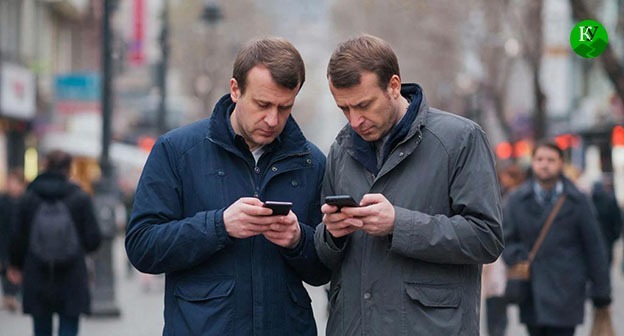
During mobile internet outages, websites and apps with access enabled are not always working, which, combined with problems with mobile communications, leads to significant problems, according to residents of southern Russia.
As reported by "Caucasian Knot," Telegram was often used for work-related communications, and existing restrictions caused difficulties in work, while available methods for bypassing restrictions are not always effective, according to residents of the Rostov and Volgograd regions, Kuban, and Kalmykia. Some expressed a willingness to switch to domestic messaging apps, while others said they would continue using Telegram.
In October 2025, Telegram channel creators in the North Caucasus and Southern Federal Districts experienced a decline in readership, difficulties posting, and reader complaints about access issues with Telegram. Roskomnadzor confirmed that the outages are due to government action. The service of these messengers is being restricted "to counter criminals" who use them to extort money and to involve Russians "in sabotage and terrorist activities," the agency explained. The active slowdown of Telegram over the past few days has created serious inconvenience for users of the messenger in the republics of the North Caucasus. People have lost an accessible way to communicate with relatives, and entrepreneurs have lost established connections with clients and are suffering losses.
The "Caucasian Knot" surveyed 12 residents from six regions of the Southern Federal District (Volgograd, Astrakhan, Rostov Oblasts, Kalmykia, Adygea, and Krasnodar Krai) to determine how the slowdown in mobile internet has affected them. The survey is not representative and reflects only the personal opinions of those surveyed.
Volgograd residents complain about internet quality with whitelisted apps
An employee of one of the Volgograd museums, who introduced himself as Andrey, told a "Caucasian Knot" correspondent that there are problems with mobile internet in the Volgograd region.

"For example, WhatsApp* is practically unavailable, and they promise to shut down Telegram at the end of March. Almost everyone uses a VPN. But it doesn't always help. That is, there's no connection. Mobile service has become worse. Sometimes it's impossible to reach a subscriber for a while. Then it's fine. Nobody knows why," Andrey said.
He reported that in Volgograd, "MAX is being forced upon people." Many have downloaded it, but it hasn't yet connected to Max. "Everyone understands perfectly well that sooner or later they'll force us to connect," Andrey noted.
Temporarily unemployed Volgograd resident Antonina Khrishchataya told a "Caucasian Knot" correspondent that internet blocking can only be combated with good, stable, and high-speed Wi-Fi and a paid VPN. But even this, according to the woman, doesn't always work—even home Wi-Fi is jammed.
"Mobile internet only exists for VKontakte and Telegram—like text messages. Mobile internet currently works for Yandex.Taxi, all marketplaces, and Gosuslugi. But it can lag. You need patience to work with it," Antonina said.
During blockages, it's better to find Wi-Fi at a cafe or other establishment. I'm running out of patience and can't wait for it to load.
According to her, the quality of mobile service depends on the phone brand and the carrier—"some are better, some are really bad."
"During blockages, it's better to find Wi-Fi at a cafe or other establishment. I'm running out of patience and can't wait for it to load. A VPN can only help with a stable Wi-Fi connection. And even then, not always. Even at home, I have to reboot my phone or change the VPN configuration. Many people switch to VKontakte, many to MAX. But our group is holding up for now," Antonina said.
A tutor and teacher who introduced herself as Svetlana Pavlovna called mobile internet "Cheburnet." The woman listed the sources from her "white list" that she frequently uses: VKontakte, Odnoklassniki, MAX, taxis, all marketplaces, stores, and Russian Post.
"They promise that banks will work well. But their apps are still terrible. But there are phones on which banking apps work well. Mine is not very advanced. But lately, the mobile connection has been really bad," Svetlana Pavlovna noted.
According to the woman, she experiences "extreme inconvenience" when she urgently needs to transfer money and there is no mobile data. Then she has to go to an ATM and make the transfer there. The lack of mobile connection, according to the teacher, is especially noticeable "when important federal officials visit our city."
"Then even the apps don't work in bank branches—not at ATMs, not at operators. They jam everything. Only Wi-Fi at home works. And even that's not guaranteed." Everyone started walking around the city with cash. Because sometimes even stores won't accept card payments. We've gotten out of the habit of carrying cash, now we're getting used to carrying it," the Volgograd resident said.
Kalmykia residents say mobile internet outages are rare

Vera Kichikova, a resident of the village of Yashkul in the Republic of Kalmykia, told a correspondent that they hadn't experienced any mobile internet restrictions. The connection is stable. Everyone uses WhatsApp*, Telegram, and Messenger apps for communication. Moreover, the All-Russian Tulip Festival is planned for April in the village, and, according to her, "no one is promising to limit mobile service."
"We can talk freely (using mobile service, note from "Caucasian Knot"). "I have a sister in the Czech Republic. We talk, text, and share videos on WhatsApp*," Vera said.
Sandzhi Bergyasov, a mechanic from Elista, told a correspondent that mobile internet restrictions in the republic's capital are rare.
"Ukrainian drones hardly ever visit us. We don't have factories or military bases. So there's no reason to shut them down. But when internet access is restricted, we'll use available means of obtaining information; we'll use the White List." "For me, access to apps from marketplaces, stores, and banks, for example, is important," Sanji explained.
Astrakhan residents reported difficulties due to internet restrictions

"We taxi drivers are probably in for a rough ride. Internet apps, even though they've been whitelisted, may not work as well as they used to. We'll have to keep going, like 30 years ago." "This is outdated, inconvenient, and unprofitable, and sometimes even dangerous," the man told a "Caucasian Knot" correspondent.
This is total control. Why do we need this kind of surveillance?
His wife, Elena, reported that parent chats in the kindergarten and school channels their children attend will only be accessible through MAX.
"I don't want to use this MAX. It could lead to provocations and tracking of our family information. I'm against it. This is total control. Why do we need this kind of surveillance? Although we are politically indifferent people. But you never know," the woman protested. The Astrakhan resident noted that mobile phone outages in the city have become more frequent since December 2025. She attributes these restrictions to drone attacks.
There are questions about the Sberbank app. It frequently crashes and loads poorly.
Vladimir Kim, an employee of an engineering firm in Astrakhan, told a reporter that he doesn't experience any "particular inconvenience from mobile service restrictions."
"I downloaded MAX a long time ago. I don't use a VPN. But I think about it sometimes. MAX is enough for me. We communicate with colleagues through VK. I use various apps for shopping, taxis, and other things without any problems. There are questions about the Sberbank app. It frequently crashes and loads poorly. But I always have cash in my pockets, fortunately, at work they pay us well and on time,” said an engineer from Astrakhan.
Rostov residents reported problems accessing whitelisted apps
Dmitry, a resident of Rostov-on-Don, reported that only Wi-Fi works well, unlike mobile internet.
“We linked our university email to Yandex, and at least we can use email because Yandex works everywhere,” he told a “Caucasian Knot” correspondent.
According to him, the problem doesn’t depend on the specific telecom operator.
“The operator doesn’t really affect anything, it’s a problem with mobile internet. If, say, I come home from outside and scroll through my Telegram feed, it takes a long time to update. To update everything "Messages take half an hour. This situation has become systemic in recent weeks," Dmitry explained.
He noted that apps not on the "whitelist" are practically non-functional, and this can create unexpected and significant difficulties.
"For example, a friend of mine bought a Chinese car in Moscow. It was fully electronic, with internet access. So, after driving into the suburbs, the electronics announced that there was no connection and nothing would work. After all, this app wasn't on the whitelist," Dmitry said.
On the outskirts, even MAX, banking apps, and online stores are unavailable. And even in the center, making a transfer through a banking app is problematic.

"On the outskirts, even MAX, banking apps, and online stores are unavailable. And even in the city center, making a transfer through a banking app is problematic. Telegram and WhatsApp* haven't worked for a long time without a VPN, and VPN connections are rarely possible, and only in the city center. Routers and geolocation work. Terminals in stores sometimes don't work—I've had to refuse purchases several times (I don't use cash). "That's the picture," he said.
Adygea resident Asfar said that while there are mobile internet problems in the region, they rarely affect him.
"I have Wi-Fi, and the internet works fine in general. With a VPN, everything is usually fine. But when there's a drone attack, yes, there can be temporary interruptions," he told a "Caucasian Knot" correspondent.
Liya, a resident of a village in the Krasnodar Territory, recalled that back in the fall, the internet was already being shut off every evening.
"They just shut it off. There was no internet at all, and there was no real connection. And that's still happening. There are several oil pumping stations or other factories near the village, and that's why they often jam the connection completely, and consequently, nothing works," she said.
Translated automatically via OpenAI from https://www.kavkaz-uzel.eu/articles/421745




![Tumso Abdurakhmanov. Screenshot from video posted by Abu-Saddam Shishani [LIVE] http://www.youtube.com/watch?v=mIR3s7AB0Uw](/system/uploads/article_image/image/0001/18460/main_image_Tumso.jpg "Tumso Abdurakhmanov. Screenshot from video posted by Abu-Saddam Shishani [LIVE] http://www.youtube.com/watch?v=mIR3s7AB0Uw")