


Analysts assess the risks for Armenia due to the war in Iran.
THIS MATERIAL (INFORMATION) WAS PRODUCED AND DISTRIBUTED BY THE FOREIGN AGENT MEMO LLC, OR CONCERNING THE ACTIVITIES OF THE FOREIGN AGENT MEMO LLC.
Military action in Iran threatens Armenia with an influx of refugees, spreading the war to the Caucasus, and renders the Zangezur transport corridor project obsolete.
As reported by the "Caucasian Knot," 2,057 people have been evacuated from Iran to Azerbaijan , including 362 Azerbaijani citizens and 291 Russian citizens. Russians are advised to leave Iran via Armenia. A collection of humanitarian aid for arriving Iranians has begun in Yerevan, and an ambassador for one of the foundations stated that up to a million people could arrive in Armenia.
Political scientist Manvel Sargsyan, political scientist Artur Khachikyan, Iranologist Vardan Voskanyan, and military expert Artak Zakaryan spoke to a "Caucasian Knot" correspondent about the risks to Armenia in connection with the war between the US and Israel with Iran.
"From the first day, the conflict between the US, Israel, and Iran forced all the small countries of the Middle East to think about their fate, since everything these countries had placed their hopes on for half a century—American military bases and capital—has turned from a source of security and prosperity into an existential threat," Manvel noted. Sargsyan.
The main lesson for small countries is that security is not ensured solely by good relations with neighbors or alliances with great powers.
"The war is not being waged solely against Iran. In fact, Iran is only part of broader processes. The international political and economic system, which the United States itself spent decades building, is changing. Now they are effectively destroying it, fearing losing control of the structures they created. The main lesson for small countries is that security is not ensured solely by good relations with neighbors or alliances with great powers. "Small states must pursue policies that prevent others from using force against them," the political scientist noted. Regarding the possibility of the war spreading to the Caucasus, Sargsyan noted that "this danger is primarily associated with Azerbaijan, which has been repeatedly accused of hosting extremist elements on its territory, and any actions from Azerbaijani territory could provoke a retaliatory reaction." "The difference in positions between Turkey and Azerbaijan is also an important factor. Azerbaijan is trying to demonstrate support for Israel and the United States, while Turkey is trying to avoid steps that could complicate relations with Iran. If one of these countries is drawn into the war, the conflict could quickly spread to our region. If Azerbaijan finds itself in a difficult situation, it is difficult to imagine that Turkey will not provide assistance." In such a case, the issue could directly affect the territory of Armenia, since Turkey has virtually no other means of supporting Azerbaijan," Sargsyan emphasized.
You must behave in such a way that no one dares to force you to bow to them.
The expert noted that "the war between the US, Israel, and Iran indicates that fraternal and good-neighborly relations have turned into mutual hatred and aggression, and that there has been a realization that the weakening American empire is destroying the prosperous world it created," and that "those who still pin their hopes for the future on an alliance with the United States are no less concerned that good-neighborly relations are no longer a guarantee." "In Armenia, too, for decades, all the hopes of the political class for security and development have been linked to good-neighborly relations in the region and an alliance with the great powers. But in reality, given modern realities, it is necessary to understand that neither the master nor the neighbor cares about the other, but pursues only their own benefit. You must behave in such a way that no one dares to force you to bow to them. There is no other way to exist,” said political scientist Manvel Sargsyan.
The war in Iran demonstrates the situation in the world
“The war in Iran is a large-scale regional war that clearly shows what a world looks like in which there is no international law and everything is decided by brute force,” noted Artur Khachikyan.
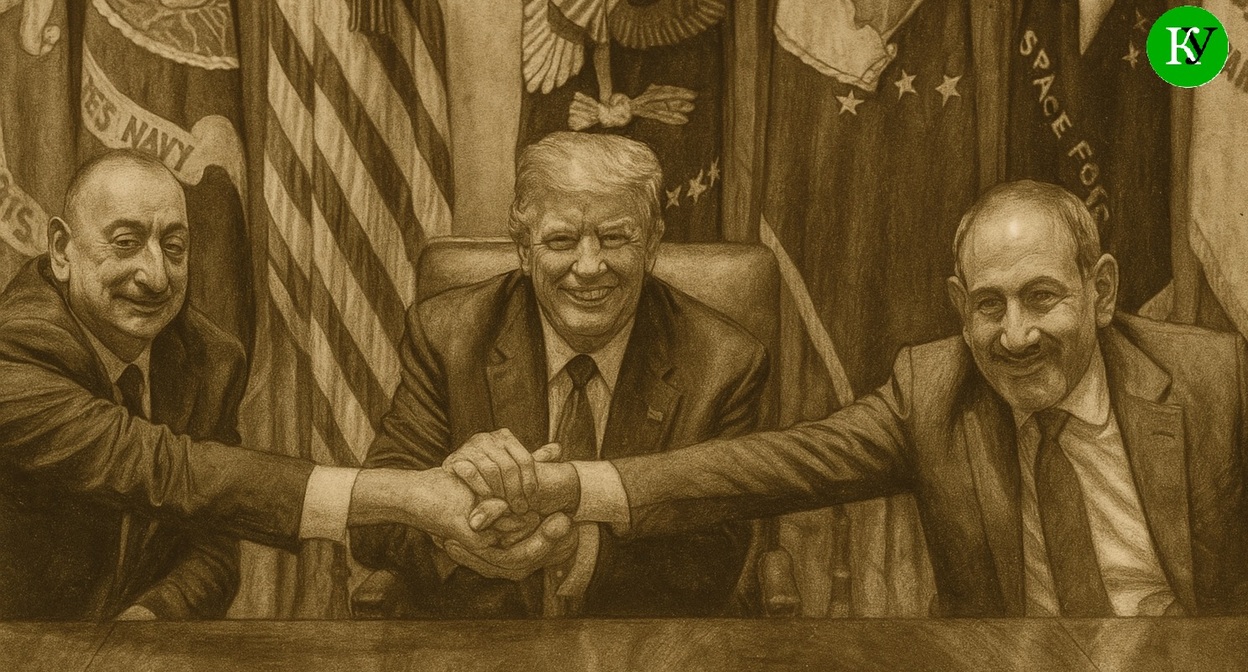
Regarding the risks for Armenia, Khachikyan noted the threat of “a flow of refugees and Azerbaijan’s exploitation of the situation to penetrate into Armenian territory.” “For Armenia, the situation in Iran poses the following risks, mainly related to refugees. This is a new flow of refugees into Armenia – this time from Iranian territory. There is also a flow of refugees from Iran to Azerbaijan, which will provide the Azerbaijani authorities with an excellent opportunity to once again demand the return of 300,000 Azerbaijanis to Armenia. Also, the flow of refugees into Azerbaijan and their spontaneous or organized penetration from Azerbaijan into the territory of Syunik (southern Armenia) and the demand for the establishment of a “security zone” in Syunik under the control of the Azerbaijani and Turkish military,” Khachikyan expressed his opinion. According to him, “the Armenian government must seriously assess the situation in the Middle East, all possible scenarios and think through their solutions, and not engage in cheap reality shows.” Vardan Voskanyan believes that “Iranian restraint, as a rule, has often become a reason for forming the opinion that this country is only making threats, but in practice, the Iranian side has actually destroyed this stereotype, since almost all the warnings and threats it previously voiced have begun to come true.” Consequently, no matter how paradoxical this may sound, even from the point of view of supporters "TRIPP" in Armenia: Iran's defeat is not in their interests. Voskanyan noted that "when discussing the challenges posed to Armenia by the war against Iran, one important risky scenario has been overlooked, and it is directly related to the much-touted 'TRIPP' route. "If, God forbid, a US puppet government is established in Iran as a result of the war, this route may lose its relevance for Washington, since, figuratively speaking, the entire territory of Iran will become a 'TRIPP.' In that case, the route through Syunik will only be needed by Baku and Ankara to establish communication between themselves via Nakhchivan, without the deterrent Iranian presence." "Therefore, as paradoxical as it may sound, even from the perspective of TRIPP supporters in Armenia, Iran's defeat is not in their interests," the Iranologist noted. Artak Zakarian noted that "it is obvious that Tehran does not aim to achieve an unconditional military victory over the United States and Israel, as it is well aware of the balance of power and the possible consequences of a direct confrontation." "However, Iran will apparently pursue a different strategy—to make this war as expensive, chaotic, and nerve-wracking as possible for all parties involved, so that over time, none of them will be interested in continuing it. Thus, Iran is trying to raise the cost of the conflict for all participants and thereby protect its strategic interests, creating a situation in which further escalation of the war becomes too risky and costly for all parties," the expert noted. As a reminder, on February 28, Israel and the United States began striking Iran. Donald Trump announced the start of a large-scale military operation. In response, Iran began shelling Israel, American military facilities, and civilian targets in the Middle East, according to the Caucasian Knot report "Key Points on the Impact of the Military Conflict with Iran on the Caucasus." The Caucasian Knot has compiled materials on the impact of military actions in Iran on the Caucasus on the thematic page "Iran: War Is Near." We've updated our apps for Android and IOS! We welcome your feedback and development ideas both on Google Play/App Store and on KU's social media pages. Without installing a VPN, you can read us on Telegram (in Dagestan, Chechnya, and Ingushetia, with a VPN). Using a VPN, you can continue reading "Caucasian Knot" on the website as usual, and on social networks: Facebook*, Instagram*, "VKontakte", "Odnoklassniki" and X. You can watch the "Caucasian Knot" video on YouTube. Send messages to +49 157 72317856 on WhatsApp*, to the same number on Telegram, or write to @Caucasian_Knot. * Meta (owner of Facebook, Instagram, and WhatsApp) is banned in Russia.
Translated automatically via OpenAI from https://www.kavkaz-uzel.eu/articles/421589

![Tumso Abdurakhmanov. Screenshot from video posted by Abu-Saddam Shishani [LIVE] http://www.youtube.com/watch?v=mIR3s7AB0Uw](/system/uploads/article_image/image/0001/18460/main_image_Tumso.jpg "Tumso Abdurakhmanov. Screenshot from video posted by Abu-Saddam Shishani [LIVE] http://www.youtube.com/watch?v=mIR3s7AB0Uw")