

Human rights activists point out the selectivity of the amnesty in Azerbaijan

The amnesty affected only 10% of the total number of political prisoners in Azerbaijan. All of them are believers convicted on trumped-up charges amid the escalation of tensions with Iran and have less than six months left in prison, human rights activists noted.
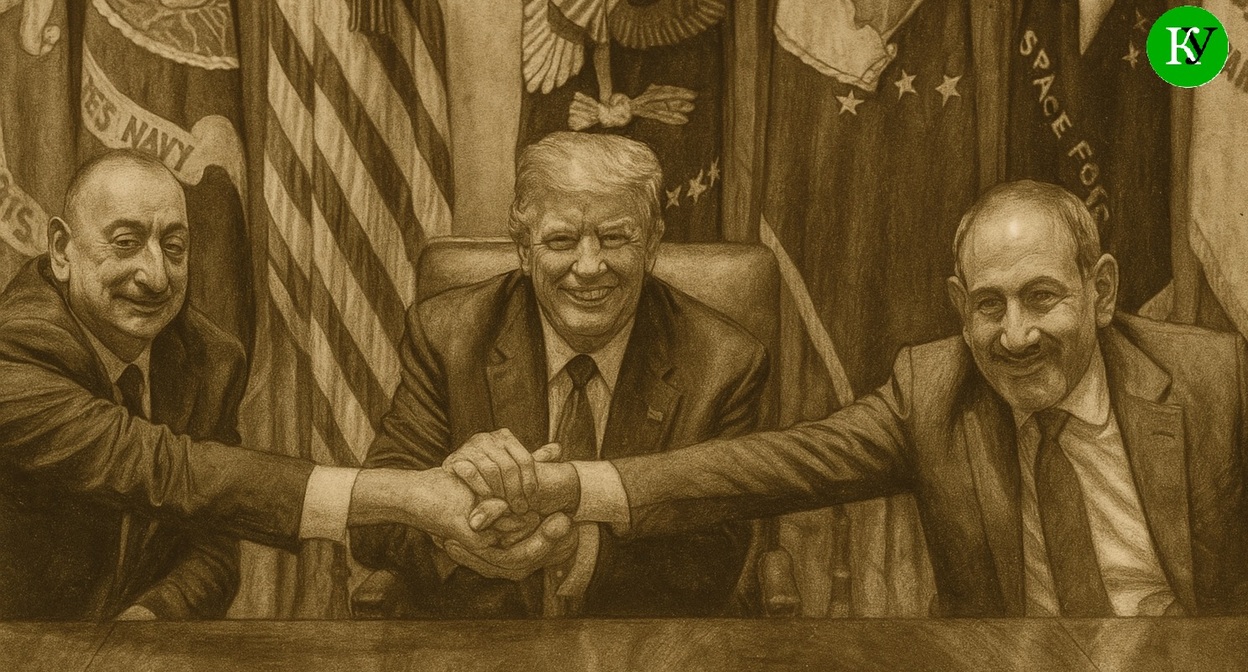
As reported by the "Caucasian Knot," on December 15, Azerbaijani President Ilham Aliyev submitted an amnesty act to parliament that will affect approximately 20,000 people. The initiative is timed to coincide with the "Year of Constitution and Sovereignty" declared in Azerbaijan in 2025 and the restoration of the country's sovereignty over its entire territory, authorities stated. Local activists welcomed the amnesty initiative, but noted that it will not solve the problem of political prisoners. Azerbaijani activists and journalists living abroad have criticized the Amnesty Act adopted by the Azerbaijani Parliament. They called the current amnesty a manipulation. Implementation of the amnesty act will begin immediately and will be completed within four months, a source in parliament told the "Caucasian Knot."
As of December 28, 36 political prisoners were released under the amnesty, said Arif Yunusov, head of the Conflict and Migration Department at the Institute for Peace and Democracy. He drew attention to the fact that "government propaganda" has launched a "traditional campaign praising the president's "act of humanism."
"However, it is no secret that all these "acts of humanism" by the authorities are aimed at reducing criticism abroad of the Azerbaijani authorities due to the number of political prisoners, the number of which has grown rapidly in recent years and today has reached almost 400 people. And in order to receive new investments from the EU for alleged reforms in the penitentiary system, something also needs to be presented, since Azerbaijan ranks first among Council of Europe countries in the number of prisoners per capita," Yunusov wrote on his Facebook page*
In his opinion, the amnesty did not solve the problem of political prisoners, since it did not affect journalists, political emigrants, human rights defenders and other civil society activists, political emigrants deported from Germany, representatives of national minorities convicted in connection with the unrest in the village of Soyudlu and the Imishli districts, who remain in prisons. defendants in the "Ganja case," the "Tertar case," and the "Nardaran case."
Emphasizing that the list of the Union for "Freedom for Political Prisoners of Azerbaijan" consists of 12 groups, Yunusov notes that the amnesty affected only "only one group - believers." "But even then, not everyone. After all, there are 249 believers on the list, which is 64 percent of the total number of political prisoners in Azerbaijan," Yunusov continued.
"This amnesty affected only those believers who were arrested in 2023 as "agents of Iran," but were officially convicted as alleged "drug addicts" under the same Article 234.1-1 (Illegal acquisition or possession without intent to sell narcotic drugs or psychotropic substances in quantities exceeding those necessary for personal consumption, committed in (large amounts) of the Criminal Code to three years of imprisonment, but only those who have a maximum of six months left before the end of their prison term. "As of today, 36 believers have been released," Yunusov noted.
The release of this group of believers will not solve the problem of political prisoners.
Considering that the amnesty will last for four months, that is, until April, it is expected that approximately 25-30 more believers, who were also arrested in 2023 as "Iranian agents" and convicted on drug charges, will be released, Yunusov continued.
"Of course, we are glad of their release and hope that the authorities do not arrest them again, especially when relations between Azerbaijan and Iran do not deteriorate again. But as we can see, even the release of this group of believers will not solve the problem of political prisoners. This won't solve the problem of believers, of whom there are still many on the list. This entire "humanitarian campaign" by the Azerbaijani authorities is just propaganda smokescreen for the West. Moreover, the places of those released will very soon be taken by others, including believers, in the coming year. The conveyor belt of repression and arrests in Azerbaijan will not be stopped. Azerbaijan will continue to lead Europe in terms of prison population, and the problem of political prisoners will remain the main one in Azerbaijan,” Yunusov concludes.
Thirty-six people have been released, all of them believers, and they had less than six months left on their sentences.
To date, the amnesty has affected less than 10 percent of the total number of political prisoners, out of 392, Elshan Hasanov, co-coordinator of the Union for Freedom of Political Prisoners of Azerbaijan, told a “Caucasian Knot” correspondent.
“Thirty-six people have been released, all of them believers, and they had less than six months left on their sentences. By April, approximately 25-30 more people from this category are expected to be released. "But taking into account the new arrests since October, when we announced the updated list of political prisoners, there will still be 350-360 political prisoners in prison, and thus the problem of political prisoners will once again not be fundamentally resolved," Gasanov told a "Caucasian Knot" correspondent.
In his opinion, the problem of political prisoners can be resolved by signing a separate order pardoning them and dropping charges against those who have not yet been convicted, and by subsequently ending the persecution of citizens for political reasons.
Azerbaijani Ombudsman Sabina Aliyeva considered the amnesty act as a step "as part of the continued humanization of the punishment policy." "This is a continuation of the state's consistent and systematic humane policy. Amnesty acts are not only a legal mechanism, but also a manifestation of social justice, mercy, and respect for human dignity," the Azertac news agency quotes Aliyeva as saying.

Ilham Aliyev initiated the previous large-scale amnesty in November 2021. The amnesty, which will cover more than 15,000 people, will not extend to political prisoners, human rights activists suggested at the time.
Moreover, in 2024, the number of political prisoners in Azerbaijan exceeded 300 for the first time since the early 2000s. In October 2025, the Union for Freedom of Political Prisoners in Azerbaijan published a new national list of political prisoners, including 392 names. At the same time, the Azerbaijani authorities deny the presence of political prisoners in the country.
We have updated the apps for Android and IOS! We welcome criticism and development ideas both on Google Play/App Store and on KU's social media pages. You can follow us on Telegram without a VPN (with a VPN in Dagestan, Chechnya, and Ingushetia). Using a VPN, you can continue reading "Caucasian Knot" on the website as usual, and on social networks: Facebook*, Instagram*, "VKontakte", "Odnoklassniki" and X. You can watch the "Caucasian Knot" video on YouTube. Send messages to +49 157 72317856 on WhatsApp*, to the same number on Telegram, or write to @Caucasian_Knot.
* Meta (owner of Facebook, Instagram, and WhatsApp) is banned in Russia.
Translated automatically via OpenAI from https://www.kavkaz-uzel.eu/articles/419514
![Tumso Abdurakhmanov. Screenshot from video posted by Abu-Saddam Shishani [LIVE] http://www.youtube.com/watch?v=mIR3s7AB0Uw](/system/uploads/article_image/image/0001/18460/main_image_Tumso.jpg "Tumso Abdurakhmanov. Screenshot from video posted by Abu-Saddam Shishani [LIVE] http://www.youtube.com/watch?v=mIR3s7AB0Uw")