

Protests in Tbilisi continued amid persecution of activists.

The Tbilisi City Court heard cases of "blocking sidewalks" near the Georgian Parliament for the first time. The hearing for five activists has been postponed until January. On the 393rd day of daily protests, supporters of European integration gathered on Rustaveli Avenue, as they do every day.
As reported by "Caucasian Knot," dozens of activists reported on social media that they were summoned to the Tbilisi City Court for "blocking a sidewalk" on Rustaveli Avenue. Despite the summonses, on the 392nd day of protests, supporters of European integration again gathered near the Georgian Parliament, as before.
On the 393rd day of continuous protests, citizens once again gathered near the Georgian Parliament on Rustaveli Avenue, despite prosecution for "blocking sidewalks." The protesters' demands remain unchanged: the release of political prisoners and new, fair elections.
The protesters carried flags of Georgia, the European Union, and the United States, declaring they are not afraid and are ready to go to the end.
Civil activists standing on the sidewalk in front of the parliament building were summoned to court one after another. The article under which the protesters are being tried carries a prison sentence, according to Pirveli TV.
Today's court hearings in the "sidewalk blocking" cases of Ani Akhmeteli, Giorgi Bulia, Nora Tsintsadze, and Marina Zhvania have been postponed until January.
Elene Jgarkava, Dean of the Business School at Caucasus University, also appeared in the dock today. The only evidence against her is a video of her standing on the sidewalk. The Ministry of Internal Affairs has coined a new term: "blocking a public sidewalk." Blocking means preventing movement, but this was not the case on Rustaveli Avenue, the publication notes.
Court hearings in a similar case against protesters are scheduled for tomorrow, December 26, and Monday, December 29. According to available information, administrative cases have been opened against 20 citizens, the television station clarifies.
On December 10, parliament adopted amendments to the Law on Assemblies and Manifestations and the Code of Administrative Offenses, prepared by the Georgian Dream party, banning spontaneous protests near government buildings. The restrictions on spontaneous protests proposed by the ruling party are contradictory to the Constitution of Georgia and equate public gatherings without police approval to a misdemeanor, human rights activists noted. On December 11, the law was officially published and entered into force after midnight. The bill requires approval from the Ministry of Internal Affairs for assemblies "in places where people move," specifically near government buildings and courthouses. Police will also be able to demand that applicants relocate the demonstration, change its time, or change its method. The amendments will effectively ban protests on Rustaveli Avenue near the parliament building, where protests are held daily. For the second year, Georgia has seen daily protests demanding new parliamentary elections and the release of all those detained for participating in demonstrations. Demonstrators have blocked traffic on Rustaveli Avenue for 343 consecutive days. Since November 6, security forces have prevented activists from blocking traffic, setting up cordons along the roadway. Protesters have been detained for attempting to enter the road. However, on the anniversary of the protests and on several other days since, protesters have marched along the roadway. Specifically, on December 6, daily protesters demanded an international investigation into the use of "kamit" to disperse demonstrators in November-December 2024. They announced weekly marches until their demand is met.
Protesters in Georgia have been demanding new parliamentary elections and the release of political prisoners since November 28, 2024. Security forces have violently dispersed the protests, using tear gas and water cannons, and detained protesters. Over the course of the protests, more than 1,000 people have been subjected to administrative prosecution. The "Caucasian Knot" has prepared a report "The Main Thing About the Persecution of Protest Participants in Georgia".
Translated automatically via OpenAI from https://www.kavkaz-uzel.eu/articles/419412
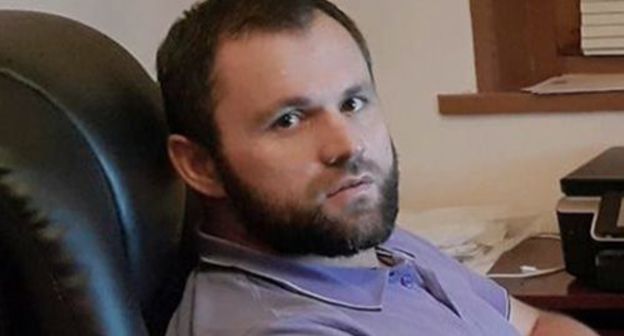
![Tumso Abdurakhmanov. Screenshot from video posted by Abu-Saddam Shishani [LIVE] http://www.youtube.com/watch?v=mIR3s7AB0Uw](/system/uploads/article_image/image/0001/18460/main_image_Tumso.jpg "Tumso Abdurakhmanov. Screenshot from video posted by Abu-Saddam Shishani [LIVE] http://www.youtube.com/watch?v=mIR3s7AB0Uw")