


Refugees from Karabakh called obtaining Armenian citizenship a forced step.
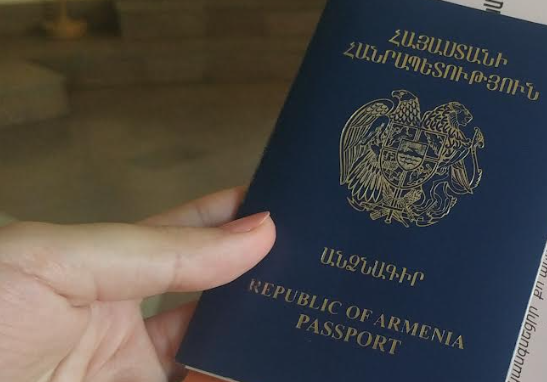
More than 26,000 refugees from Karabakh have received Armenian citizenship. The displaced persons themselves called the decision forced; they needed to obtain an Armenian passport to find work and participate in the housing program. Karabakh human rights activists believe that accepting Armenian citizenship does not deprive refugees of the right to return.
As reported by the "Caucasian Knot," Armenian authorities have made citizenship a mandatory requirement for participation in the housing program. By September 6, more than 16,000 refugees from Nagorno-Karabakh have received Armenian citizenship, including five thousand minors, who receive citizenship automatically following their parents. By September 23, 2,823 Karabakh refugee families had received certificates under the Armenian government's housing program, 907 of whom had used the certificates.
According to the Armenian government's housing program, adopted in 2024, each member of a Nagorno-Karabakh refugee family can receive a certificate for the purchase or construction of housing. Certificates worth 5 million drams (approximately $13,000) are issued to families who purchase housing in border settlements. Those settling in 452 settlements in remote areas from the capital (from July 2025 – in 611 settlements) can receive 4 million drams (about 10.5 thousand US dollars).
“As of the first half of December, 26,233 refugees from Nagorno-Karabakh received citizenship of the Republic of Armenia, and the applications of another 6,696 people are under consideration,” Deputy Minister of Labor and Social Affairs David Khachatryan said at a session of the National Assembly of Armenia on December 16.
He recalled that “having citizenship is a prerequisite for receiving state support under the housing program” for forcibly displaced persons from Nagorno-Karabakh.
In The press service of the Ministry of Social Affairs of Armenia was informed that “as of now, 3,810 families have already submitted applications and received housing certificates, of which 1,631 families have managed to purchase housing.”
The Nagorno-Karabakh representative office in Yerevan told the “Caucasian Knot” correspondent that of the 26,000 refugees from Nagorno-Karabakh who received Armenian citizenship, about 16,000 are adults, the rest are children whose parents received citizenship, and another 7,000 applications are under consideration.
Karabakh lawyer Armen Danielyan clarified that “new passports with Armenian citizenship are issued with the code 099, which indicates that the citizen is a migrant without permanent residence and own real estate," "When a citizen has his own home and housing, the next passport he receives will contain the code of the region where he will be registered as a permanent resident," he told a "Caucasian Knot" correspondent.
The sharp increase in the number of refugees who have received Armenian citizenship has its reasons, said Nagorno-Karabakh Ombudsman Gegham Stepanyan.
"Firstly, people prefer to spend money not on rent, but on mortgages. Especially large families. Secondly, I suspect that political parties that intend to participate in the upcoming 2026 elections in Armenia have intensified their campaigning, and those who receive citizenship will have the right to vote," Stepanyan told a "Caucasian Knot" correspondent.
The Armenian government has unconstitutionally stripped refugees from Karabakh of their citizenship of the Republic of Artsakh (Nagorno-Karabakh), "but in the current situation we are forced to apply for Armenian citizenship," emphasized former Nagorno-Karabakh Ombudsman and public figure Artak Beglaryan.
"However, our right to return to Artsakh is in no way connected with our citizenship, and whether in Armenia or another country, whatever citizenship we adopt, the right to return to Artsakh remains unchanged forever, until death. Our property rights are also preserved unchanged, without any connection to citizenship. "Again, we are in no way being deprived of our property rights," Beglaryan told a "Caucasian Knot" correspondent.
Obtaining Armenian citizenship is not a renunciation of anything, but, first and foremost, the acquisition of full rights.
Among the refugees, there is a widespread belief that if they do not receive Armenian citizenship, they will "receive some kind of compensation after a short time" or "be able to return to Artsakh," noted Karabakh activist Lusine Poghosyan.
"Such talk has neither a legal nor a political basis; it is simply intended to instill false hope in people and keep them in uncertainty. In reality, obtaining Armenian citizenship does not mean giving up anything, but, first and foremost, acquiring full rights: the right to education, full access to healthcare, work, and participation in domestic political processes—the same rights and responsibilities that all citizens of the Republic of Armenia enjoy. "Every internally displaced person from Artsakh must obtain Armenian citizenship in order to have protected rights, a clear status, and a dignified future in the Republic of Armenia," Poghosyan told a "Caucasian Knot" correspondent.
Alen Ghulyan from Nagorno-Karabakh noted that many were forced to obtain citizenship. "The overwhelming majority were forced to obtain citizenship due to housing certificates and the basic need to have the right to work, since in many government agencies, especially in the security forces, where many served for years, citizenship is a mandatory requirement," he told a "Caucasian Knot" correspondent.
According to him, it is also worth considering that "the actual number of Artsakh residents who have emigrated from Armenia over the past two years is much higher than the official figure." He also pointed out that "data on the number of Karabakh residents who died on the territory of Armenia over the past two years, unable to withstand the severe consequences of forced displacement, is not published."
We accepted Armenian citizenship only to be able to find work, but we will never renounce our rights to return and self-determination.
Armen Mkrtchyan from Stepanakert is certain that Karabakh residents are being forced to change their passports so that they renounce their right to return.
"Then, when all the refugees accept Armenian citizenship, the Azerbaijani government will announce a referendum in Nagorno-Karabakh. "Then we will finally lose our right to our homeland, because we are all already citizens of Armenia," Mkrtchyan noted.
"In fact, Artsakh was part of the Republic of Armenia, even if no country recognized it. Citizens of Artsakh were considered citizens of the Republic of Armenia. And now that the Armenians of Artsakh have become refugees, doesn't accepting the Armenian government's policies mean betraying the homeland and abandoning the struggle? "I don't rule out that after receiving citizenship, several percent of Artsakh citizens, either out of fear or under pressure, will be forced to vote for the current Armenian government, which would be another betrayal," said Lira Sargsyan, a refugee from Nagorno-Karabakh.
It is impossible to insist on the right to return if you are a citizen of another country, says Nune Yeremyan, a refugee from Stepanakert.
"Only by remaining a citizen of the Republic of Artsakh, as a refugee, do you have the right to fight for your return to your homeland. But if you're a citizen of another state, you have no right to make demands on another country," Yeremyan believes. "We accepted Armenian citizenship only to be able to find work, but we will never give up our rights of return and self-determination," Irina Grigoryan told a "Caucasian Knot" correspondent.
Translated automatically via OpenAI from https://www.kavkaz-uzel.eu/articles/419268

![Tumso Abdurakhmanov. Screenshot from video posted by Abu-Saddam Shishani [LIVE] http://www.youtube.com/watch?v=mIR3s7AB0Uw](/system/uploads/article_image/image/0001/18460/main_image_Tumso.jpg "Tumso Abdurakhmanov. Screenshot from video posted by Abu-Saddam Shishani [LIVE] http://www.youtube.com/watch?v=mIR3s7AB0Uw")