

The Georgian Parliament has tightened penalties for organizing marches
According to amendments to the Law on Assemblies and Demonstrations adopted by the Georgian Parliament, restrictions previously imposed on holding rallies on roads now also apply to sidewalks and pedestrian streets. To hold a march, a notification must be submitted to the Ministry of Internal Affairs, and violations are punishable by arrest.
As reported by the " Caucasian Knot ," on December 8, it was reported that the Georgian parliament plans to expedite the consideration of amendments to the law "On Assemblies and Demonstrations" and the Code of Administrative Offenses, proposed by the ruling Georgian Dream party, banning spontaneous protests near government buildings. The restrictions on spontaneous protests proposed by the ruling party are contrary to the Georgian Constitution and equate public gatherings without police approval to a misdemeanor, human rights activists pointed out.
The bill requires approval from the Ministry of Internal Affairs for assemblies "in places where people move," specifically near government buildings and courthouses. Police will also be able to demand that applicants relocate their demonstrations, change their timing, or change the method of holding them. The amendments will effectively ban protests on Rustaveli Avenue near the parliament building, where protests are held daily.
The Georgian Parliament has expeditiously passed a bill that will extend restrictions on public gatherings to include events held on pedestrian streets. The bill passed its third reading with 79 votes in favor (9 against), InterPressNews reported today.
Amendments to the Law "On Assemblies and Demonstrations" require prior notification to the Ministry of Internal Affairs if an assembly or demonstration is held in a public area. Furthermore, similar to blocking a road, artificially blocking pedestrian areas is prohibited unless the number of participants in the assembly or demonstration requires it. Blocking pedestrian areas with vehicles, various structures, and objects is also prohibited.
The organizer of an assembly or demonstration will be required to notify the Ministry of Internal Affairs, not the municipal authority, of the assembly or demonstration. Upon receiving the notification, the Ministry of Internal Affairs will be authorized to propose that the organizers change the location or route of the assembly if the form, location, or route of the proposed assembly poses a threat to public order, the normal operation of state and public bodies, enterprises, institutions, organizations, and transportation, as well as the unimpeded movement of people or human rights and freedoms.
If participants in a spontaneous or non-spontaneous assembly or demonstration refuse to agree to hold the assembly or demonstration at the location or along the route proposed by the Ministry of Internal Affairs and continue to hold the assembly or demonstration at that location, the participants in such assembly or demonstration will be subject to administrative arrest for up to 15 days, and the organizer will be subject to administrative arrest for up to 20 days. For repeated violations of the same act, the participant or organizer is subject to criminal liability under Article 347 of the Criminal Code, specifically, imprisonment for up to one year.
In mid-October, the Georgian parliament adopted legislative amendments that toughened penalties for violations during protests. The Georgian Dream party's authors explained that the law was aimed at those who regularly block Rustaveli Avenue. Now, wearing a mask at a rally or blocking the road is punishable by administrative arrest for up to 15 days. Refusal to end a rally when ordered by police is punishable by arrest for up to 60 days. The Criminal Code now provides for up to one year in prison for repeat violations of protest rules, and up to two years for subsequent violations.
Following the adoption of the legislative amendments, security forces began arresting protesters en masse on Rustaveli Avenue. Most of them were accused of blocking the avenue and obstructing traffic.
For the second year, daily protests have been taking place in Georgia demanding new parliamentary elections and the release of all those detained for participating in the demonstrations. Demonstrators have blocked traffic on Rustaveli Avenue for 343 consecutive days. Since November 6, security forces have prevented activists from blocking traffic, setting up cordons along the roadway, and have detained protesters for attempting to enter the road.
On December 9, the 377th day of continuous protests, demonstrators marched through central Tbilisi, calling on Georgian citizens to join the protests.
Protesters in Georgia have been demanding new parliamentary elections and the release of political prisoners since November 28, 2024. Security forces violently dispersed the protests, using tear gas and water cannons, and detained protesters. Over 1,000 people were subjected to administrative prosecution during the protests. The "Caucasian Knot" has prepared a report, " Key Points on the Persecution of Protesters in Georgia ."
We've updated our Android and iOS apps ! We welcome your feedback and development ideas both on Google Play/App Store and on KU's social media pages. You can read us on Telegram without a VPN (with a VPN in Dagestan, Chechnya, and Ingushetia). Using a VPN, you can continue reading "Caucasian Knot" on the website as usual and on social media: Facebook *, Instagram *, VKontakte , Odnoklassniki , and X. You can watch "Caucasian Knot" videos on YouTube . Send messages to +49 157 72317856 on WhatsApp*, to the same number on Telegram, or write to @Caucasian_Knot.
* Meta (which owns Facebook, Instagram, and WhatsApp) is banned in Russia.
Source: https://www.kavkaz-uzel.eu/articles/418967


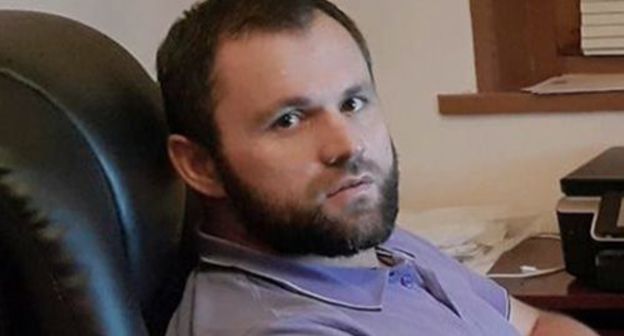
![Tumso Abdurakhmanov. Screenshot from video posted by Abu-Saddam Shishani [LIVE] http://www.youtube.com/watch?v=mIR3s7AB0Uw](/system/uploads/article_image/image/0001/18460/main_image_Tumso.jpg "Tumso Abdurakhmanov. Screenshot from video posted by Abu-Saddam Shishani [LIVE] http://www.youtube.com/watch?v=mIR3s7AB0Uw")