

Hunger strikers outside the Georgian parliament condemned the actions of security forces.
The intervention of security forces in the protest on Rustaveli Avenue on November 6 and the prosecutor's office's announcement of the persecution of opposition leaders demonstrate the need to consolidate efforts to continue the fight against Georgian Dream, said Gedevan Popkhadze, who is continuing his hunger strike outside parliament for the 11th day.
As reported by the "Caucasian Knot," on November 2, another woman joined the hunger strike conducted by opposition politicians outside the Georgian parliament, bringing the number of participants to six. On November 4, two more people joined the hunger strike, which opposition members are conducting in protest against the persecution of demonstrators, bringing the total number of participants to eight. On November 6, hunger strikers required medical attention.
On October 28, Gedevan Popkhadze, a leader of the Coalition for Change, Darejan Tskhvitaria, an activist with the United National Movement, and several others announced a hunger strike in protest against the daily arrests of demonstrators blocking Rustaveli Avenue. The action is taking place outside the Georgian Parliament building, where protesters gather daily.
The hunger strike outside the Parliament building continues for the eleventh day. The hunger strikers have stated that they will continue their protest as long as their health allows, TV channel Pirveli reported today. One of the protesters, politician Gedevan Popkhadze, responded to the events that took place on November 6 on Rustaveli Avenue, when, for the first time since November 28, 2024, participants in the ongoing protest in central Tbilisi failed to block traffic on Rustaveli Avenue. He stated that this cannot continue, and the fight against the "dream" must continue through joint efforts.
"The prosecutor's office stated that there will be no democracy, law, or justice in this country. This was the main message of their briefing: the number of political prisoners has increased, and the country faces complete isolation. All of this strengthens our belief in the correctness of our protest, and I believe that the hunger strike is also the right form. While we feel strong, we feel cheerful, but our primary concern is not our health or lives. Our primary concern is what is happening in Georgia, and all of this must be put to an end through joint efforts," said Gedevan Popkhadze.
An investigation has been launched into a criminal case of crimes against the state. On November 6, the prosecutor's office named Georgia's third president, Mikheil Saakashvili, and seven opposition leaders among the suspects. The charges include organizing protests after the 2024 elections, hostile activity against Georgia, and calls for the overthrow of the government.
The hunger strikers are currently feeling well, although weakened after 11 days of hunger strike. Although their condition may worsen, they say they do not intend to stop the struggle, the television station clarified.
In mid-October, the Georgian Parliament adopted amendments to the law that toughened penalties for violations at protests. The authors of the initiative from Georgian Dream explained that the law is aimed at those who regularly block Rustaveli Avenue. Now, appearing at a rally wearing a mask or blocking the road is punishable by administrative arrest for up to 15 days. Refusal to end a rally at the request of the police carries a prison term of up to 60 days. The Criminal Code now provides for up to one year in prison for repeat violations of protest rules and up to two years for subsequent violations.
Following the adoption of the amendments to the laws, security forces began mass arrests of protesters on Rustaveli Avenue. Most of them are accused of blocking the avenue and obstructing traffic.

Protesters in Georgia have been demanding new parliamentary elections and the release of political prisoners since November 28, 2024. They have been holding daily protests on Rustaveli Avenue. Security forces violently dispersed the protests, using tear gas and water cannons, and detained protesters. More than a thousand people were subjected to administrative prosecution.
Translated automatically via OpenAI from https://www.kavkaz-uzel.eu/articles/417030


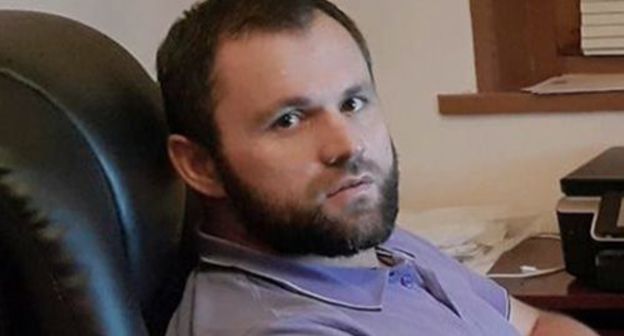
![Tumso Abdurakhmanov. Screenshot from video posted by Abu-Saddam Shishani [LIVE] http://www.youtube.com/watch?v=mIR3s7AB0Uw](/system/uploads/article_image/image/0001/18460/main_image_Tumso.jpg "Tumso Abdurakhmanov. Screenshot from video posted by Abu-Saddam Shishani [LIVE] http://www.youtube.com/watch?v=mIR3s7AB0Uw")