


The Sadygov family called the fines for blocking roads in Tbilisi unaffordable.
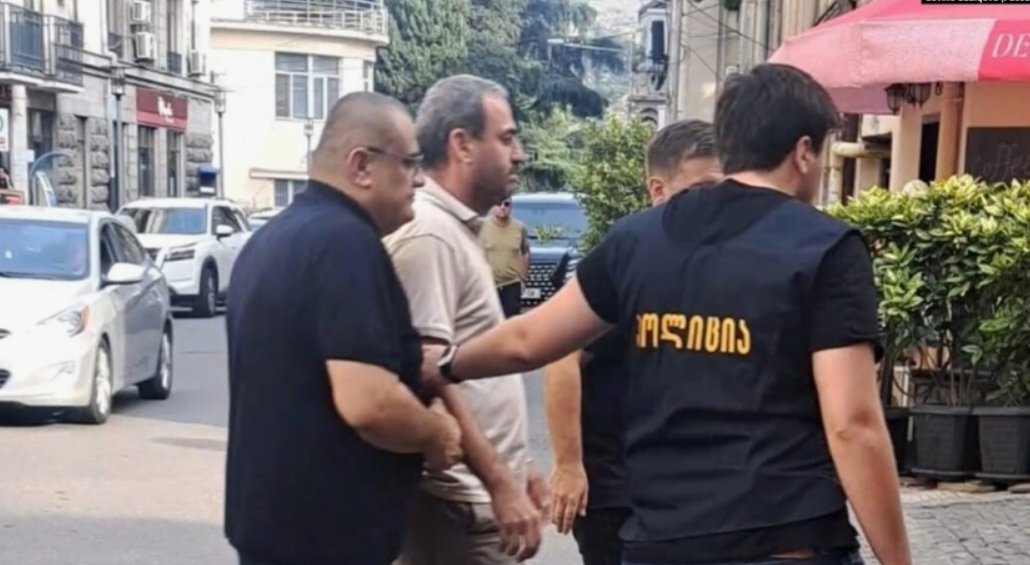
The defense appealed the fines imposed on Azerbaijani journalist Afgan Sadigov in Georgia, totaling more than $100,000, for his involvement in roadblocks. The appellate court upheld Sadigov's administrative arrest. Georgian authorities know that Afgan Sadigov is unable to pay these fines, his family reported.
As reported by "Caucasian Knot," on October 23, the Tbilisi City Court sentenced Azerbaijani journalist Afgan Sadigov to 14 days of administrative arrest, finding him one of those who blocked traffic on Rustaveli Avenue. In addition to administrative arrest, Afgan Sadygov was also fined 270,000 lari (approximately $99,800) for 54 offenses. Afgan Sadygov, who spent a long time in a Tbilisi pretrial detention center, regularly participated in protests after his release. On October 17, for example, he burned portraits of Bidzina Ivanishvili and Vladimir Putin during a protest on Rustaveli Avenue. On October 22, the journalist stopped communicating with his family.
Afgan Sadygov's lawyer, Mariam Kvelashvili, filed an appeal against the fines for "participating in roadblocks."
In a conversation with a "Caucasian Knot" correspondent, she clarified that Sadygov was issued not 54, but 55 fines, each worth five thousand lari, for a total of 275 thousand lari (approximately $101,294).
According to her, Sadygov and the defense learned of the fines, covering the period from July 29 to October 17, 2025, only after the end of the trial for his arrest.
"Then we were informed of 54 fines, and later, when the court decision was issued, we learned of another fine. Thus, their total number was 55," the lawyer told a "Caucasian Knot" correspondent.
Police claim the fines were issued based on CCTV footage. However, Afgan Sadygov was not informed of the fines, the lawyer emphasized.
Kvelashvili noted that in the appeal, the defense requested video evidence of Afgan Sadygov's participation in the roadblocks, as the video recordings were not included in the decisions imposing the fines.
When asked whether there were other cases of multiple fines for similar actions in Georgia, the lawyer answered in the affirmative, pointing to the recent prevalence of such practices in the activities of law enforcement agencies.
The lawyer also noted that in October 2025, new legislation came into force in Georgia, toughening penalties for protests by blocking roads.
"These actions are 'illegal' from the perspective of Georgian legislation, and since October they are no longer punishable by fines, but rather by administrative arrest. However, from the perspective of the ECHR's precedent-setting decisions, if citizens wanted to be heard by the government by blocking roads, then this is a completely legitimate protest," the lawyer said.
On the other hand, "it is illogical to accuse citizens of blocking roads, while the police at the Georgian Parliament building themselves block the road during protests," the lawyer said.
Kvelashvili noted that repeating acts of blocking roads after administrative arrest, according to new Georgian legislation, will now carry a criminal penalty of up to 1 year in prison.
The lawyer believes that issuing multiple fines was intended to pave the way for administrative arrests, and in the event of continued participation in protests, prison terms.
The lawyer believes that these measures are intended to intimidate citizens and deter them from participating in protests outside parliament, which have been ongoing for more than 330 days.
Kvelashvili also reported that the appeal against Sadygov's arrest has already been rejected, and now the defense will seek to overturn the fines through appeals.
She found it difficult to answer definitively when asked whether Sadygov's arrest was related to his status as a foreign citizen or a journalist. At the same time, she added that Sadigov is "quite recognizable" to law enforcement agencies.
Answering the question of whether Sadigov's administrative arrest could serve as grounds for extradition or deportation of the journalist to Azerbaijan, the lawyer cited a case in which a Russian citizen was deported to Russia after administrative arrest.
On October 23, a Tbilisi court sentenced Russian citizen Nikolai Belikov, detained during protests on Rustaveli Avenue, to 14 days of administrative arrest. After serving his arrest, Belikov must be deported to his country of citizenship; he will also be banned from re-entering Georgia for two years.
"I don't think this will happen to Afgan Sadigov. There's an ECHR ruling prohibiting his extradition to Azerbaijan, where he could face an unfair trial," the lawyer said.
On September 20, 2024, Afgan Sadigov announced a hunger strike in a Tbilisi pretrial detention center in protest of his arrest and denial of political asylum. The journalist only ended his hunger strike in January, agreeing to take yogurt with vitamins, although he was still refusing food in February and had been on a dry hunger strike for several days. On February 28, the European Court of Human Rights banned Georgia from extraditing Sadigov to Azerbaijan pending a ruling on the merits of the case. On April 16, a Tbilisi court released Sadygov on bail, complying with the ECHR ruling.
At the same time, Kvelashvili added that given Afgan Sadygov's intention to continue participating in protests in Georgia, he could be rearrested and sentenced to up to a year in prison.
The wife of journalist Sevinj Sadygov doubts that her husband participated in roadblocks 55 times.
"Yes, Afgan participated in protests. He believes that the Georgian authorities, like those of Azerbaijan, violate human rights and cooperate in this. Afgan was fined 55 times without his knowledge. But there is not a single video evidence of his personal participation in road closures. There was one video in the media where Afgan was walking with a flag in the middle of the road on Shota Rustaveli Avenue. As I learned from his lawyer, Afgan himself said in court that he was a participant in mass protests in which roads were blocked. But there was nothing illegal in this from the point of view of the European Convention on Human Rights. These were peaceful protests,” Sadygova told a “Caucasian Knot” correspondent.
Sadygova emphasized that her husband does not have 275,000 lari to pay the fines.
“They (the Georgian authorities) themselves know very well that Afgan is not able to pay these "Fines. He has no job, property, or business in Georgia. These fines are clearly intended to intimidate Afgan or to create a 'legal basis' to prevent him from leaving the country to reunite with his family," said Sadygova, who lives with her two daughters in France.
She emphasized that after his arrest, she was unable to talk to her husband on the phone.
"The detention center says there are no phone calls to France. But I have an active Georgian number. I contacted the Georgian Ministry of Justice to create a way for Afgan to call me on my Georgian number; this will not entail additional costs for the detention center. But they still won't allow Afghan to call me," said Sadygova.
Georgian law enforcement agencies could not be reached for comment. succeeded.
Translated automatically via OpenAI from https://www.kavkaz-uzel.eu/articles/416773

![Tumso Abdurakhmanov. Screenshot from video posted by Abu-Saddam Shishani [LIVE] http://www.youtube.com/watch?v=mIR3s7AB0Uw](/system/uploads/article_image/image/0001/18460/main_image_Tumso.jpg "Tumso Abdurakhmanov. Screenshot from video posted by Abu-Saddam Shishani [LIVE] http://www.youtube.com/watch?v=mIR3s7AB0Uw")